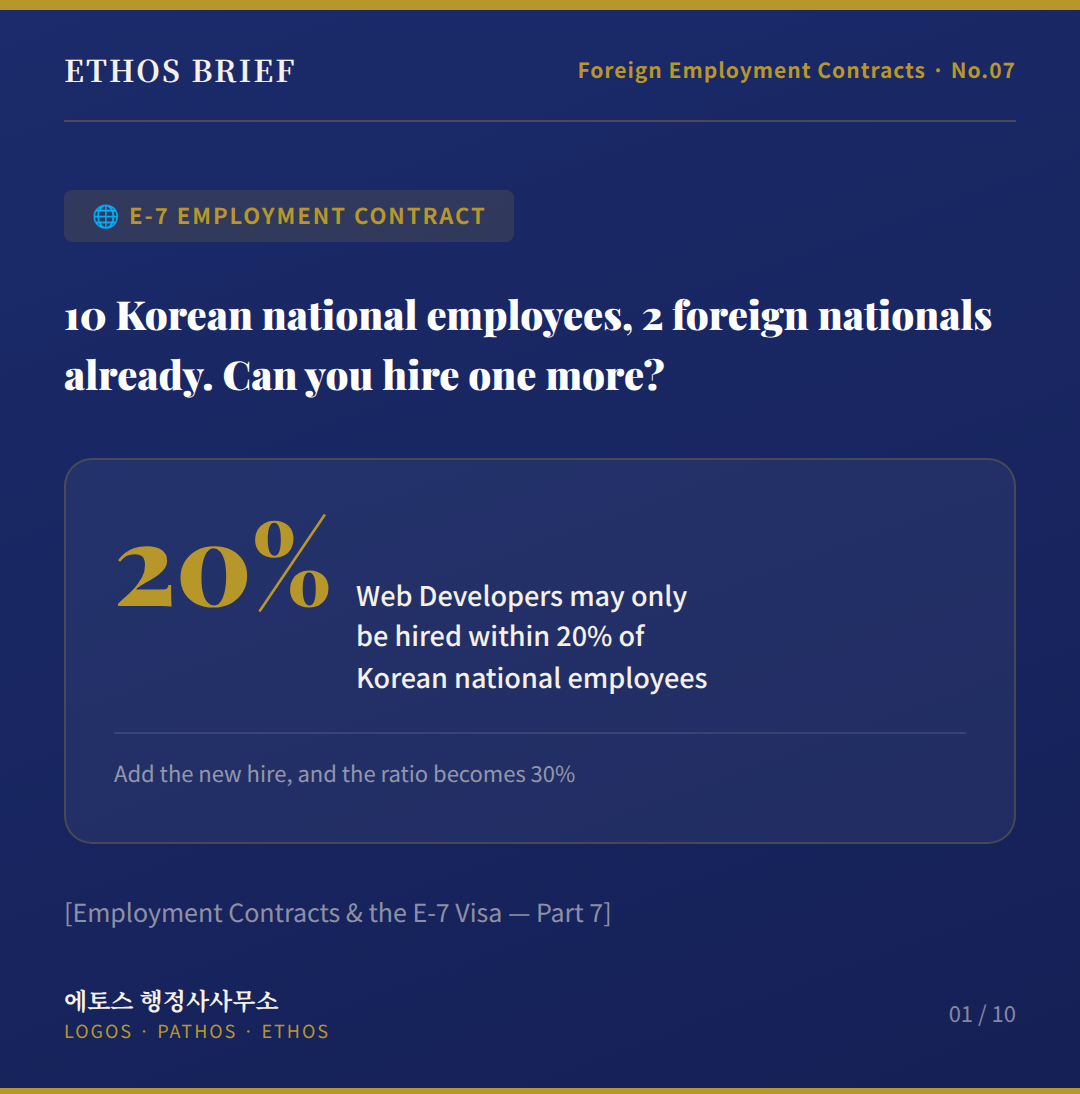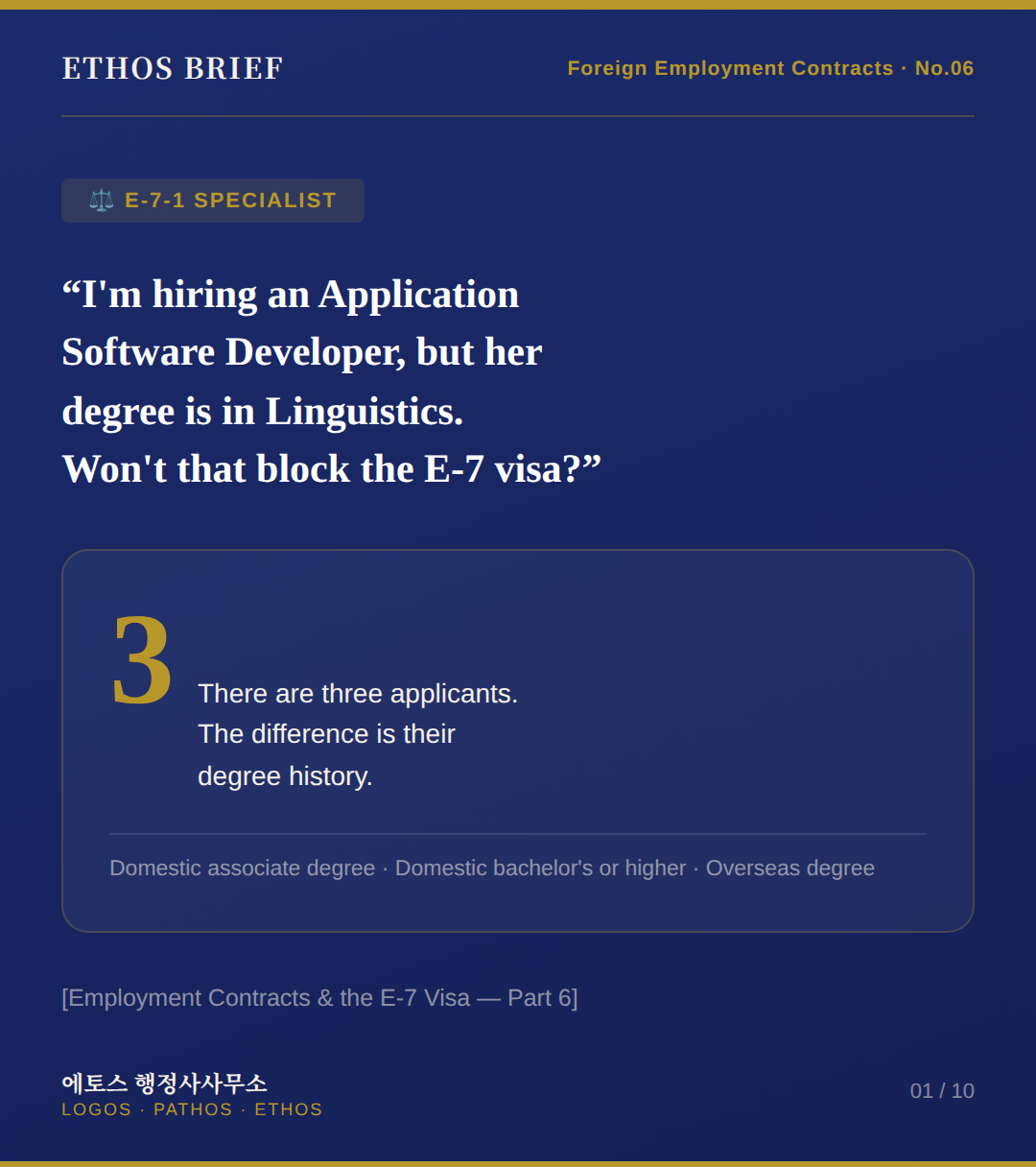
Can you obtain an E-7 work visa in Korea if your degree is unrelated to the job? Learn how eligibility differs for Korean bachelor’s degree holders, associate degree holders, and overseas graduates. This guide also covers relevant work experience, overseas talent exemptions, and employment contract requirements.
9/18/2026
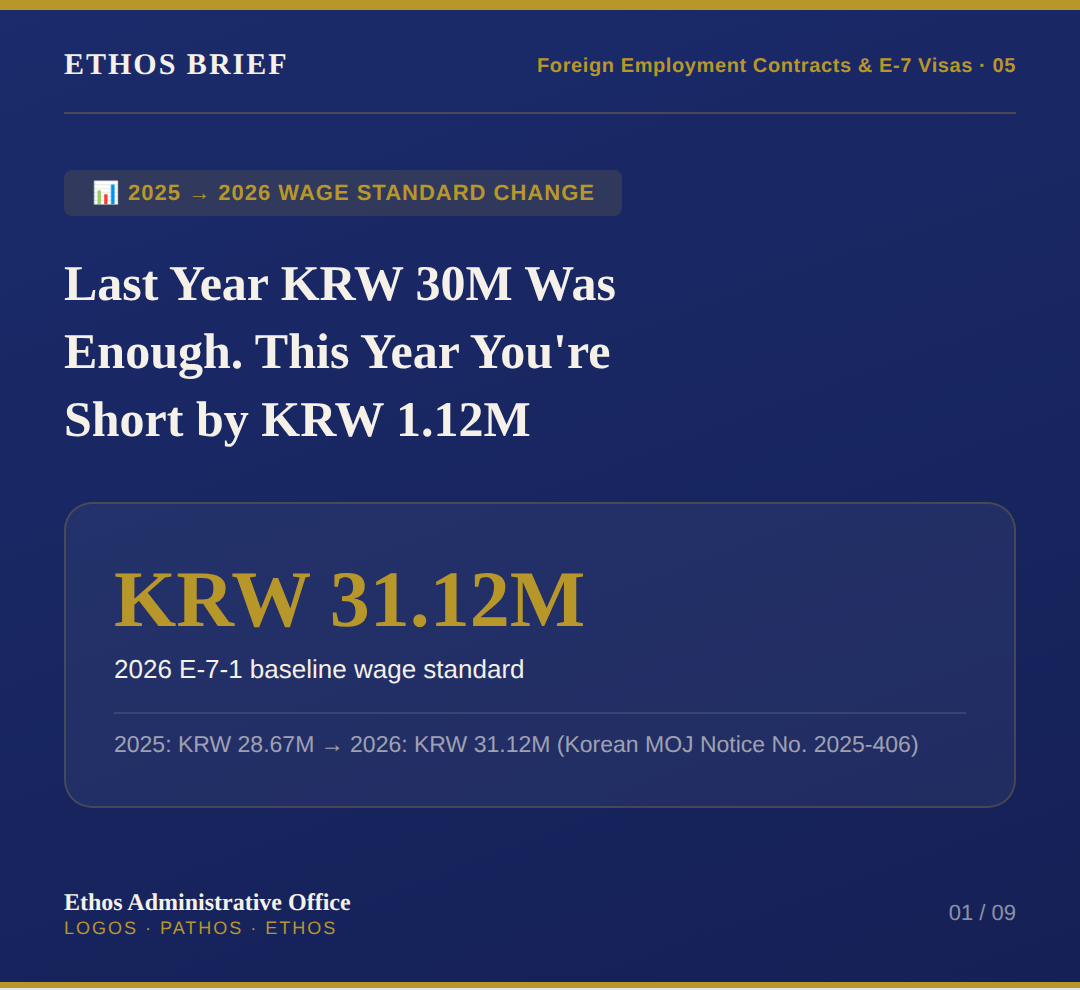
Korea’s 2026 E-7 visa salary requirements vary by visa category and occupation. Learn the basic annual thresholds, occupation-specific exceptions, and how bonuses and benefits affect salary assessments. This guide explains what employers should verify before finalizing an employment contract with a foreign worker.
9/16/2026
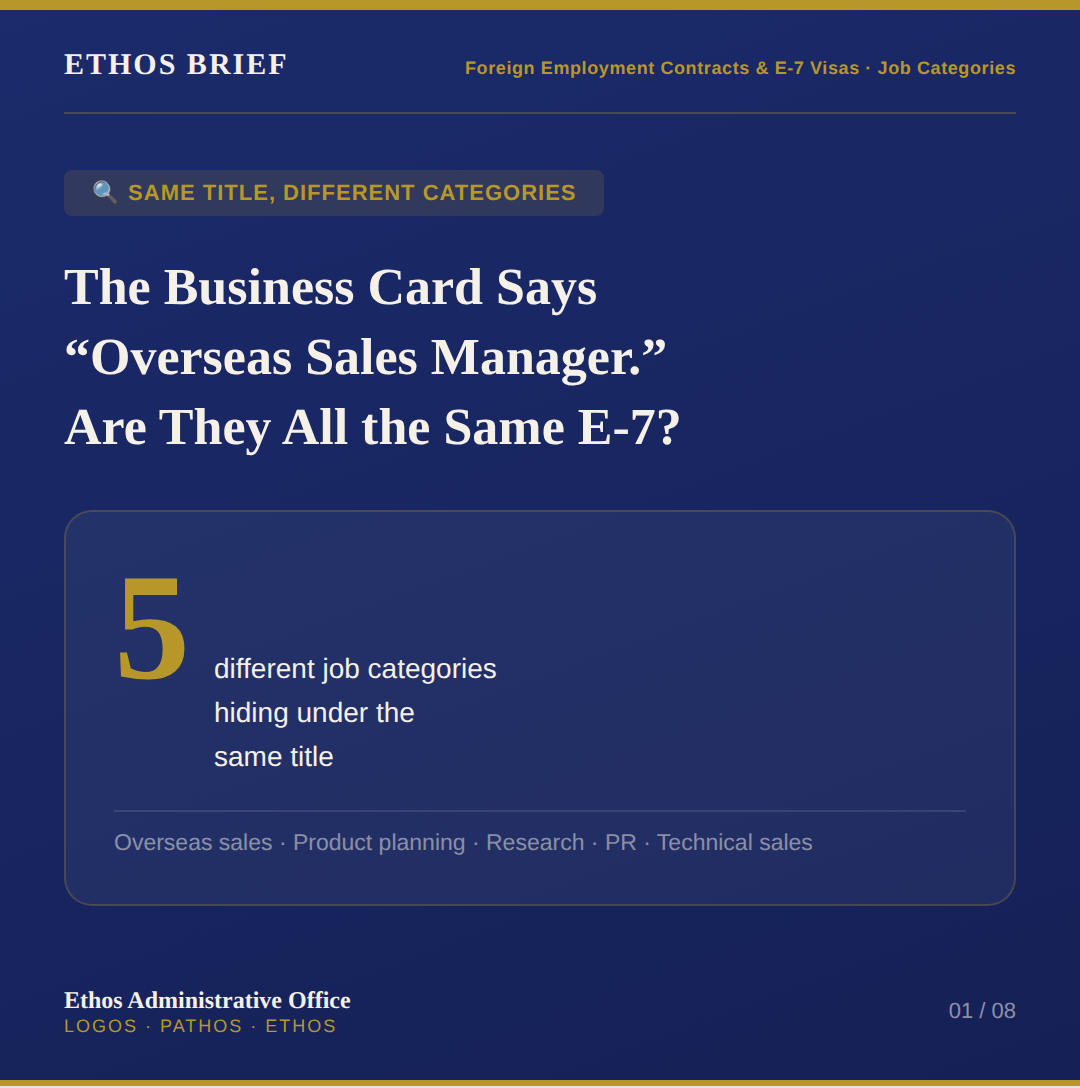
When hiring a foreign employee in Korea under an E-7 visa, a company job title such as “Overseas Sales” or “Global Sales Manager” does not automatically determine the appropriate E-7 occupation. The relevant occupation may differ depending on whether the employee’s actual duties primarily involve finding overseas buyers and negotiating export contracts, product planning, market research, advertising and public relations, or technical sales. This article explains how to identify the appropriate E-7 occupation based on actual job duties, with reference to updated occupation codes and an administrative appeal case.
9/13/2026
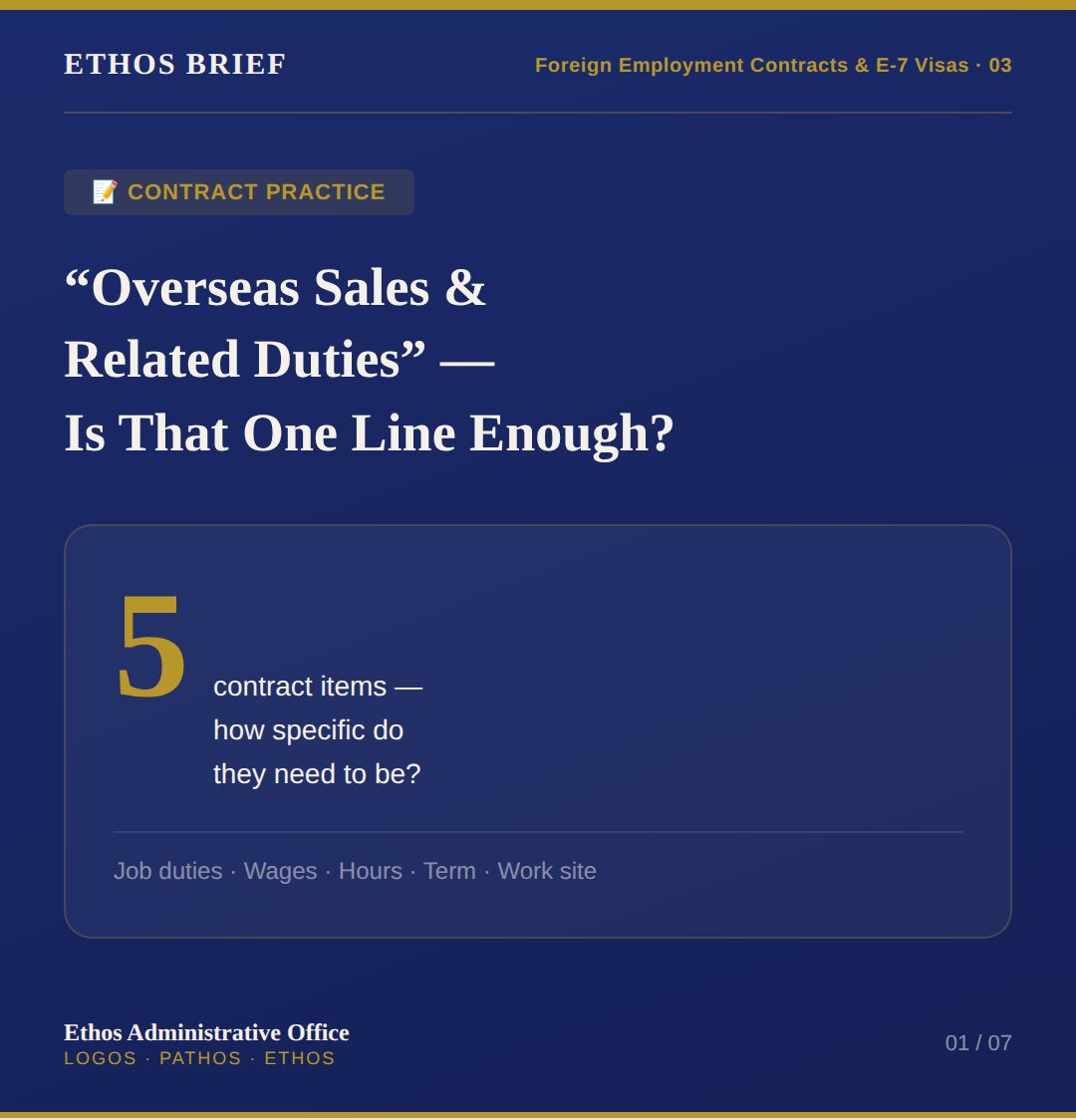
When hiring a foreign employee in Korea under an E-7 visa, how specific should the employment contract be about job duties, salary, working hours, contract period, and workplace? The key is not using wording that merely appears favorable for the visa application, but ensuring that the contract clearly reflects the actual employment conditions. This article explains the main items employers should review before signing an E-7 employment contract and the practical issues that should be clarified in advance.
9/10/2026
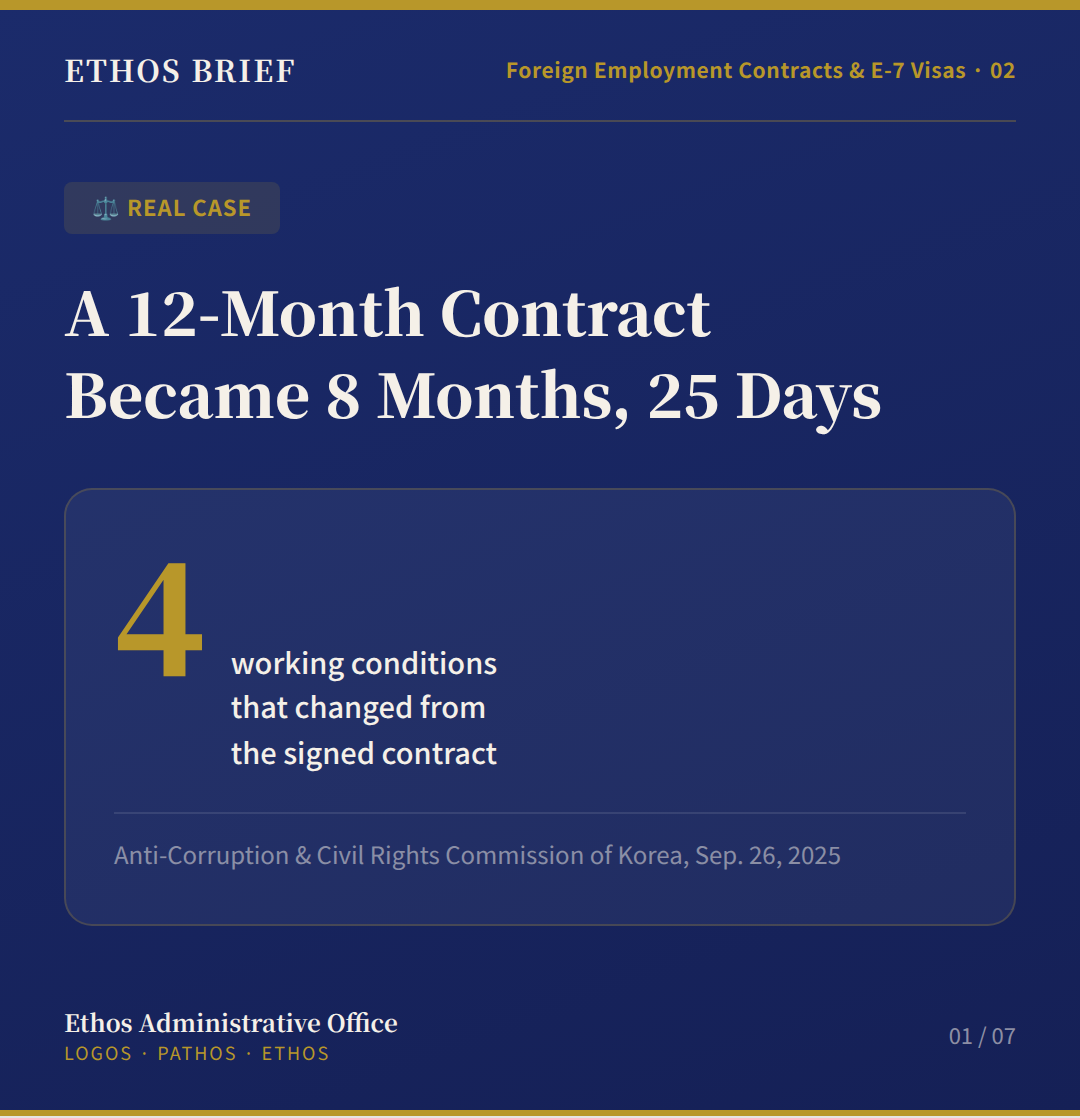
When hiring a foreign employee under an E-7 visa in Korea, the key issue is not creating a separate “special E-7 contract.” Employers should ensure that the duties stated in the contract, the selected E-7 occupation, the employee’s actual work, and the actual employment conditions all describe one consistent employment relationship. This article explains how to review an E-7 employment contract through an actual case published by Korea’s Anti-Corruption and Civil Rights Commission.
9/6/2026
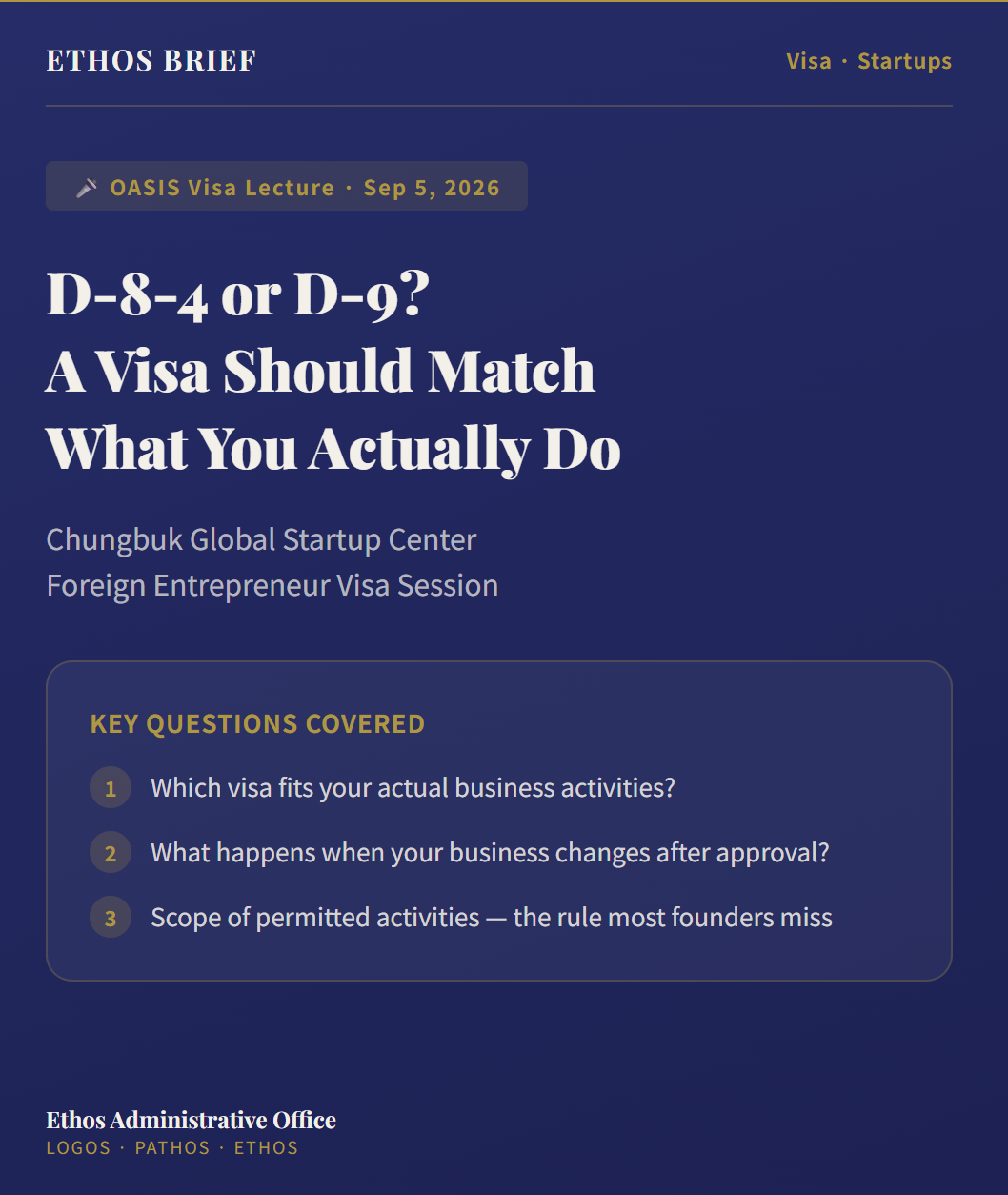
On September 5, I delivered an OASIS visa lecture for foreign entrepreneurs at the Chungbuk Global Startup Center. This article covers the differences between the D-8-4 technology startup visa and the D-9 trade visa, permitted activities under each status of stay, issues to consider when business activities change, the importance of reviewing an official disposition notice after a visa denial or extension refusal, and where to check the latest official immigration information in Korea.
9/5/2026
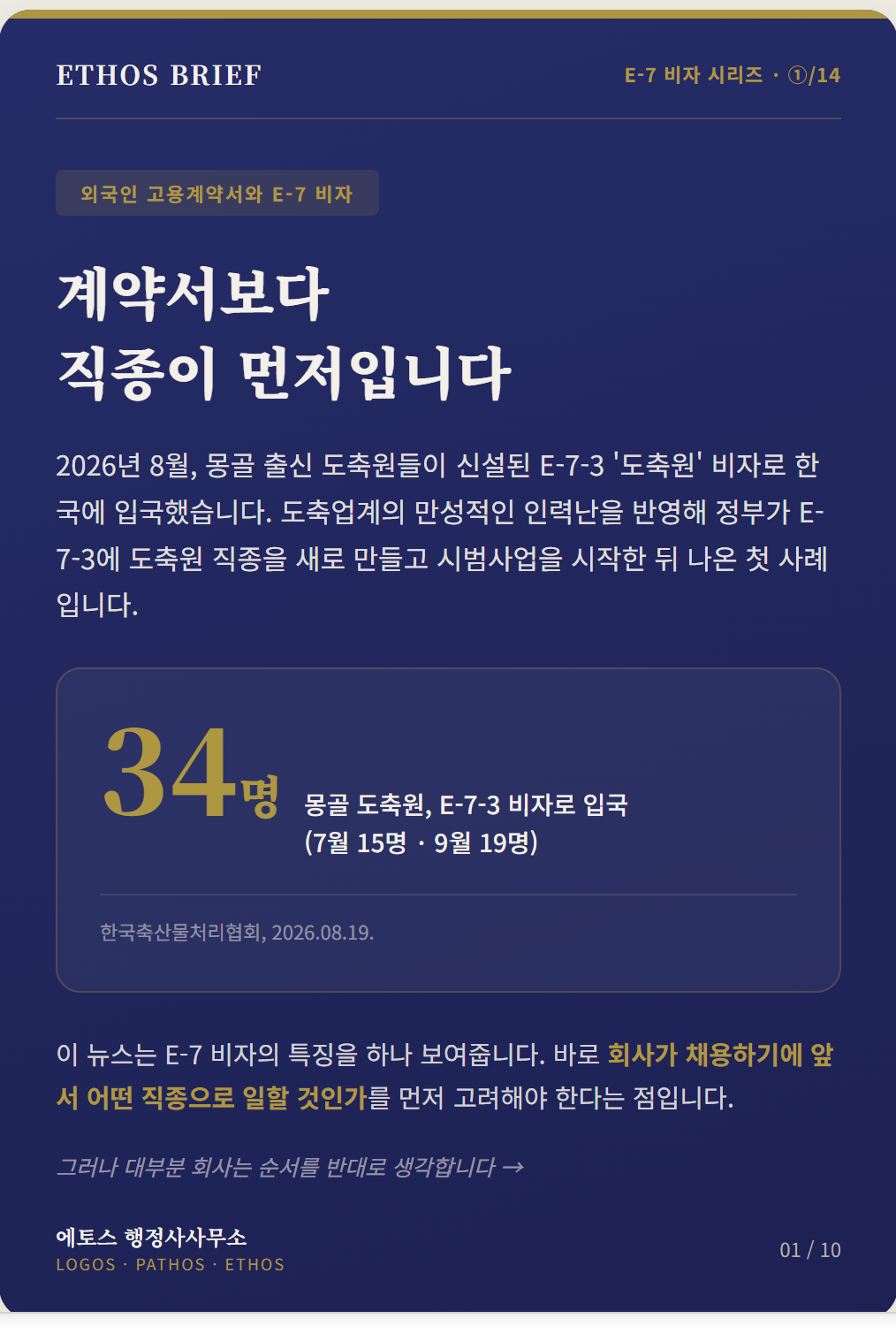
When hiring a foreign employee under an E-7 visa in Korea, the employment contract should not be the starting point. The actual duties, applicable E-7 occupation, candidate qualifications, employer requirements, and employment terms should be reviewed in sequence. This article explains the framework through Korean immigration rules and actual administrative appeal cases.
9/2/2026
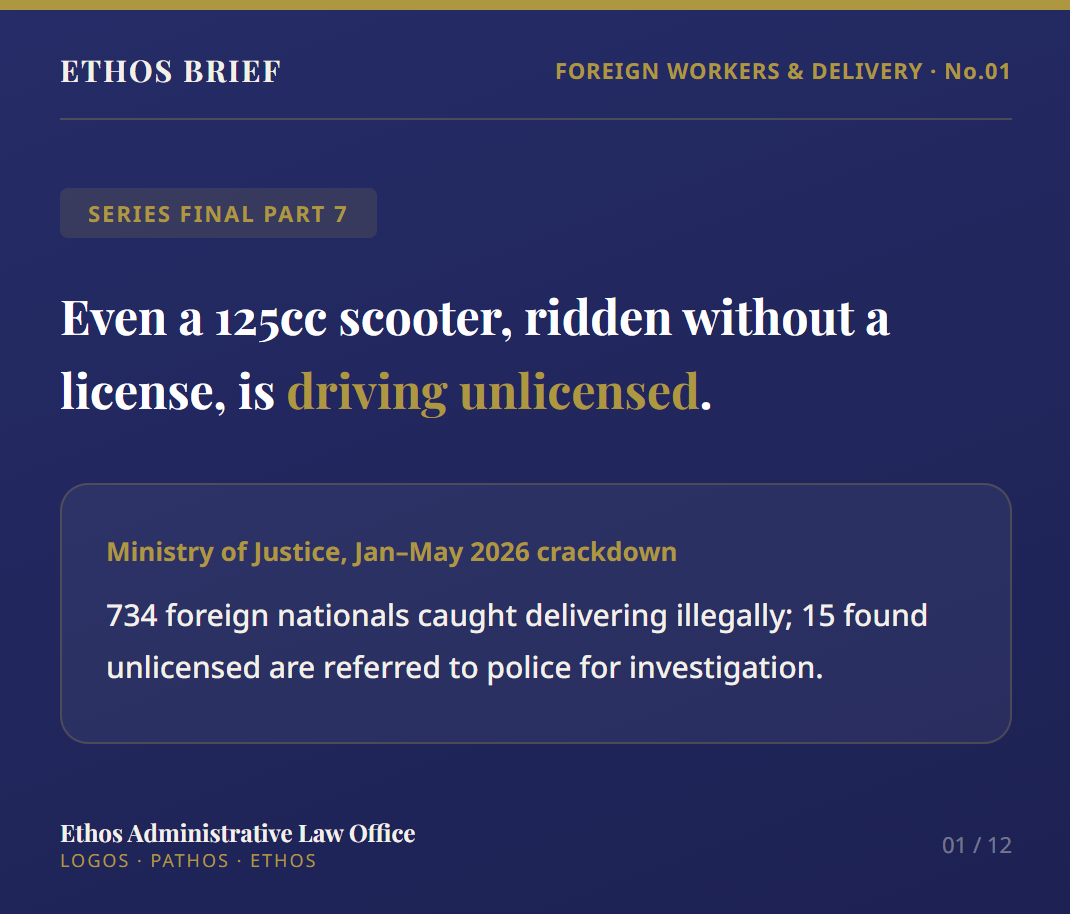
Foreign nationals doing motorcycle delivery work in Korea must check more than their visa status. A valid driving license is required even for motorcycles of 125cc or less, and a foreign driving license alone does not automatically authorize driving in Korea. Motorcycles without mandatory insurance cannot be operated on public roads, and riders should also confirm whether their insurance actually covers paid delivery activity. If unlicensed driving, insurance issues, and immigration violations arise together, police proceedings and immigration procedures may move forward separately.
8/29/2026
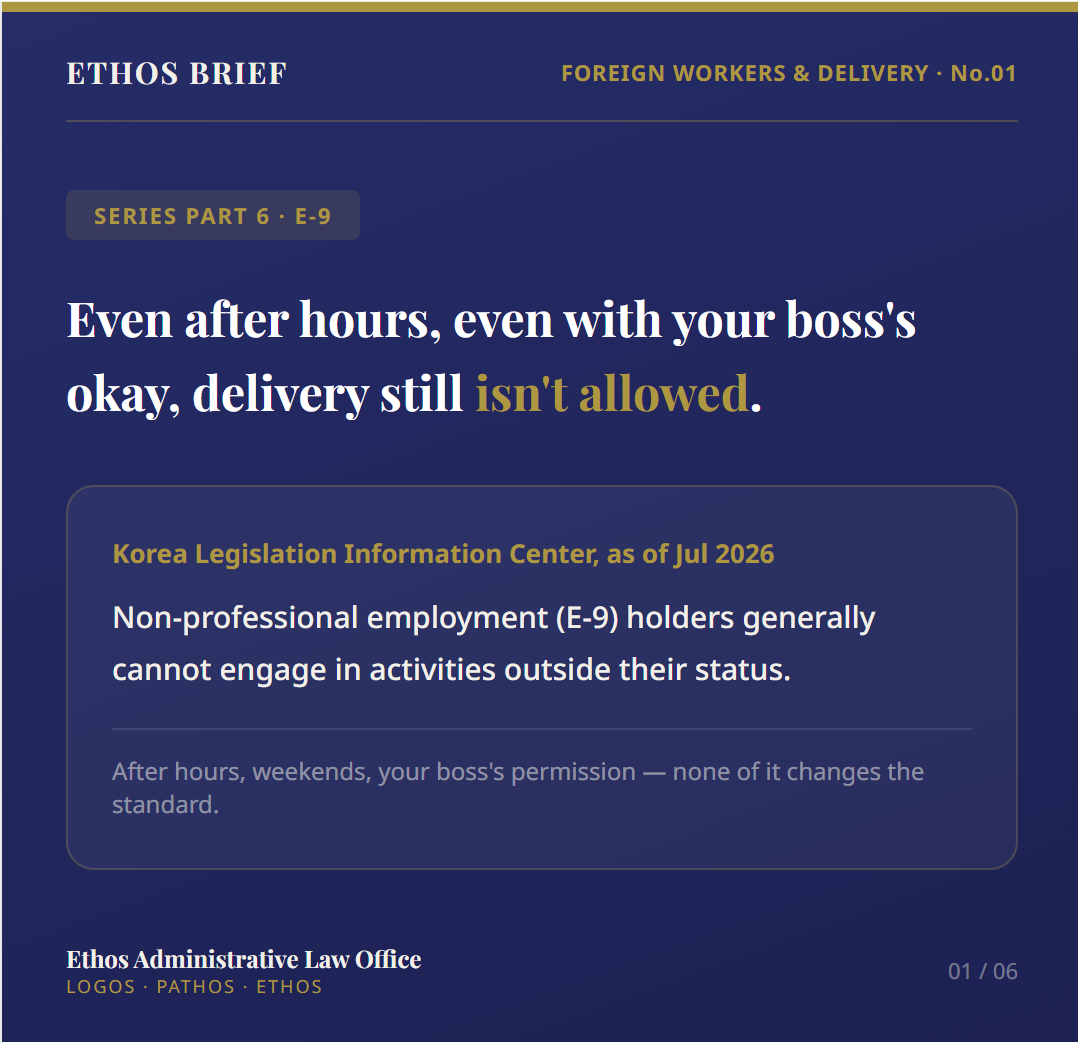
E-9 foreign workers in Korea generally cannot treat after-hours platform delivery work as an ordinary side job. The E-9 system is tied to approved industries, specific occupations, and authorized workplaces under Korea’s Employment Permit System. Although certain parcel-service jobs are open to E-9 workers in 2026, the permitted roles are limited to tasks such as loading, unloading, and cargo sorting—not platform delivery riding. If delivery work has already been performed, the worker should review the actual work period, platform records, payment history, account used, and current employment authorization. If the real issue is difficulty remaining at the current workplace, a lawful workplace-change procedure may need to be considered first.
8/28/2026
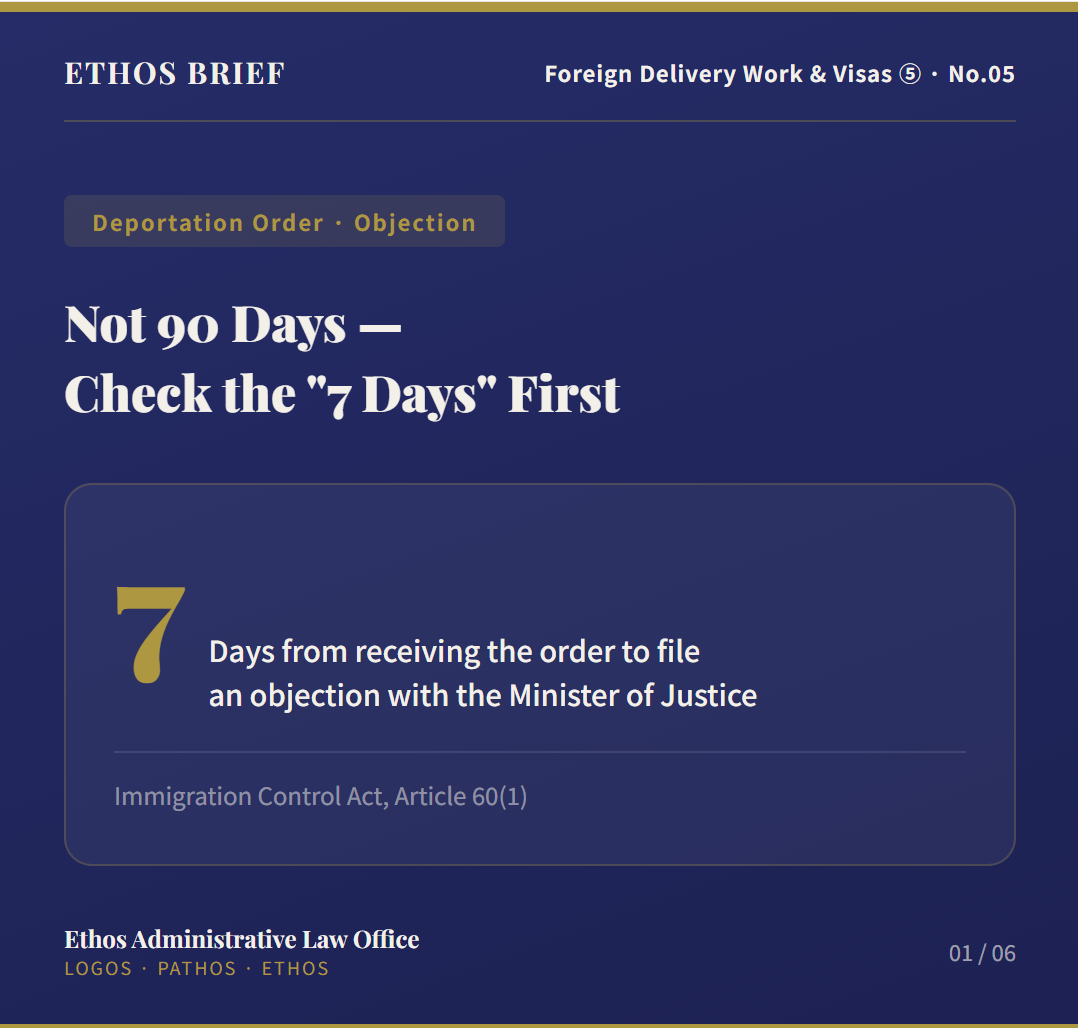
Foreign nationals who receive a deportation order in Korea should not focus only on the commonly mentioned 90-day period for administrative appeals. Under Korea’s Immigration Act, there is also a separate 7-day objection procedure to the Minister of Justice, counted from the date the deportation order is received. The 7-day objection and the 90-day administrative appeal or litigation period are different procedures, and filing a challenge does not automatically suspend enforcement. In an actual case, the document date, legal grounds for deportation, investigation record, family and stay circumstances, and current detention or enforcement status may all need to be reviewed together.
8/26/2026
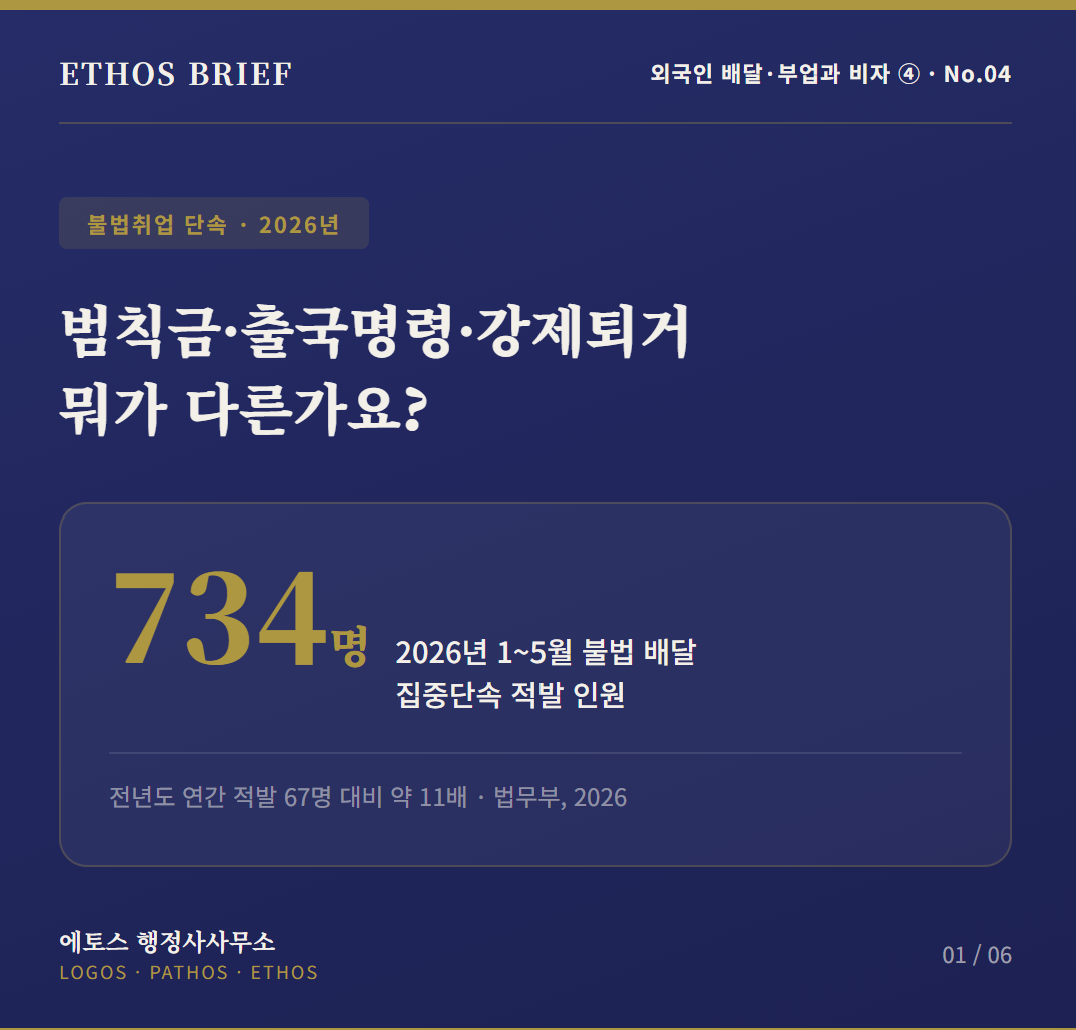
Foreign nationals caught doing unauthorized delivery work in Korea do not all receive the same immigration disposition. A penalty payment, departure order, and deportation order have different legal effects and procedures, and actual outcomes may vary depending on factors such as status of stay, duration of unauthorized work, stay circumstances, and prior statements. If Korean immigration authorities have already issued documents in your case, the first step is to identify the exact document, date of receipt, applicable deadline, and current procedural stage.
8/25/2026
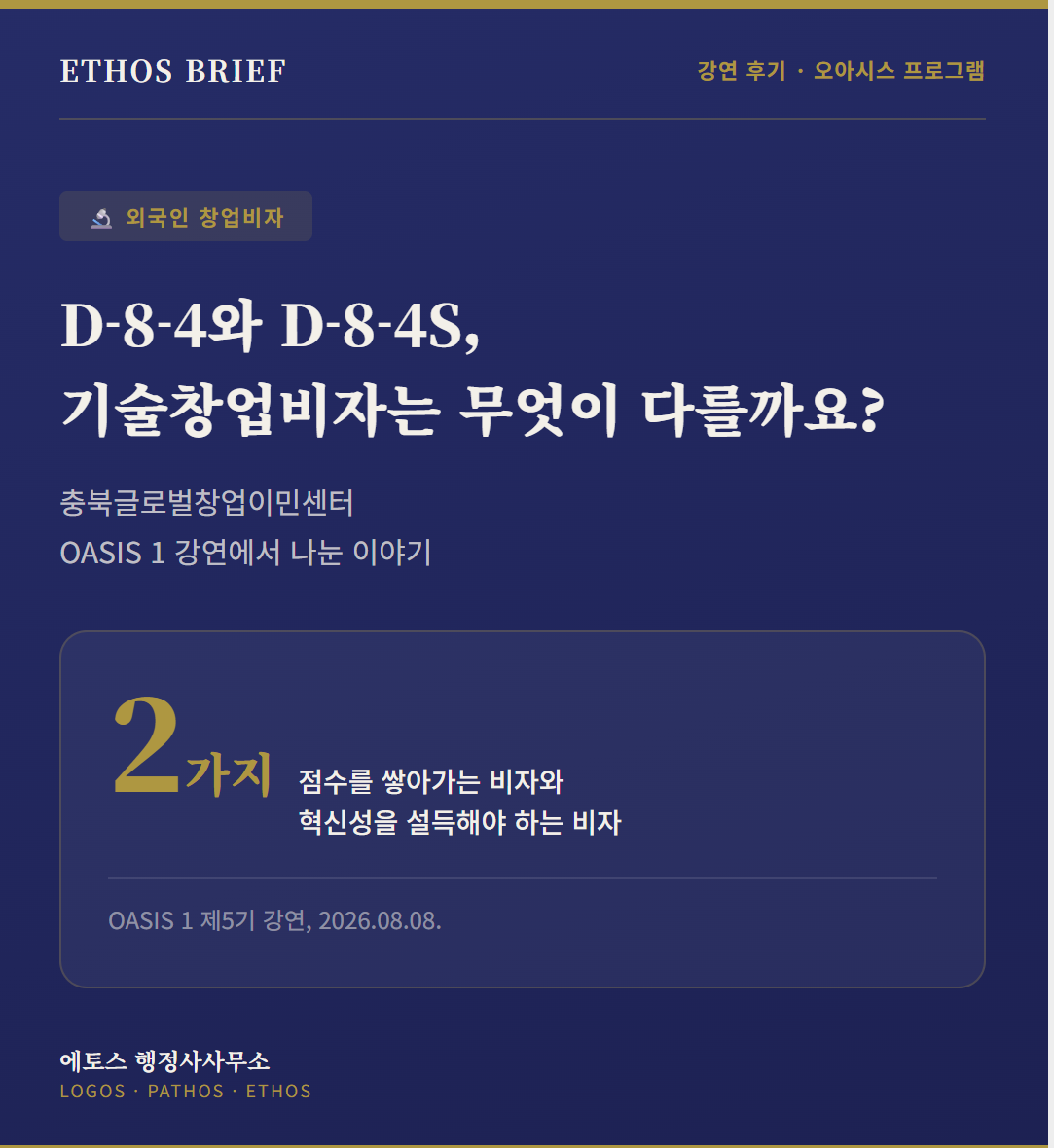
On August 8, 2026, I delivered an OASIS 1 lecture at the Chungbuk Global Startup Immigration Center in Osong. For foreign founders preparing for the D-8-4 Tech Startup Visa or D-8-4S Startup Korea Special Visa, the real challenge is not just collecting documents, but explaining technology, intellectual property, innovation, immigration strategy, and possible access to administrative information.
8/22/2026
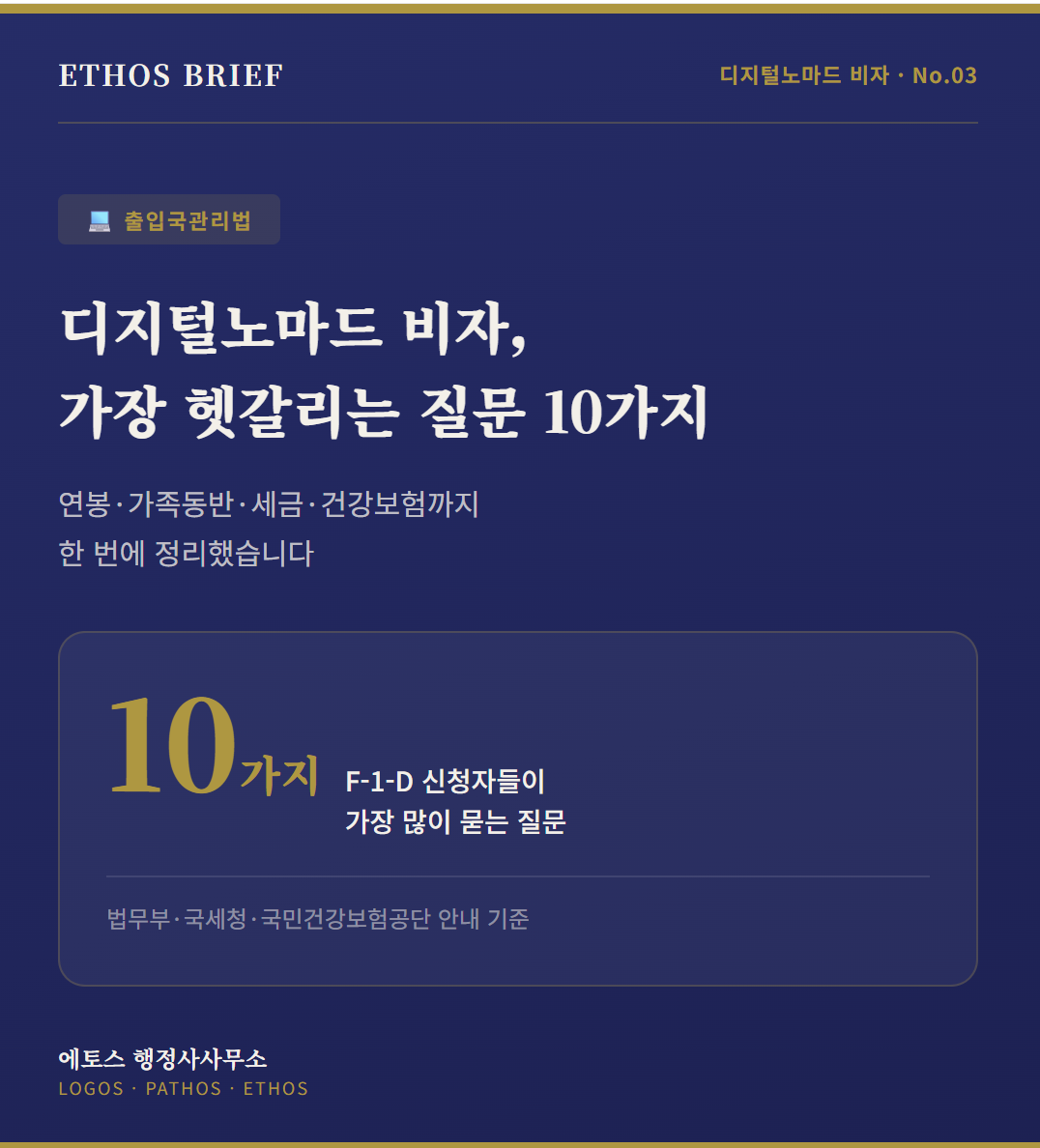
Korea’s Digital Nomad Visa, officially the F-1-D Workation Visa, became a permanent program on June 30, 2026. The income threshold now varies by age, region, and family accompaniment, but applicants still need to check key issues such as freelance income proof, local accommodation, tax residency, health insurance, and long-term visa strategy.
8/22/2026
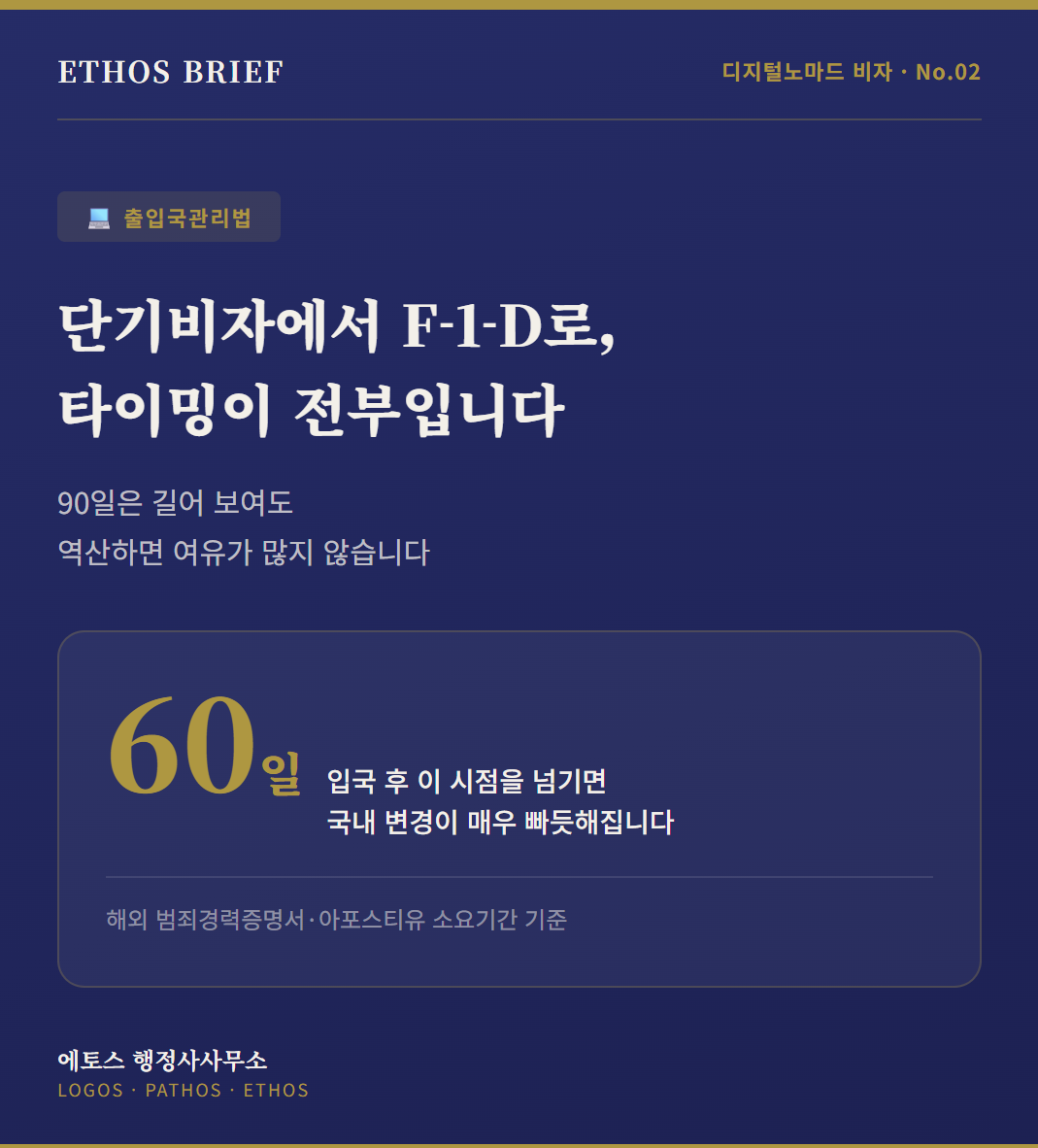
If you are already in Korea on short-term status and want to change to the F-1-D Digital Nomad Visa, timing is the real issue. Criminal record certificates, apostille or consular confirmation, Korean translation, income proof, medical insurance, and HiKorea appointment scheduling must all be completed before your current stay expires.
8/22/2026
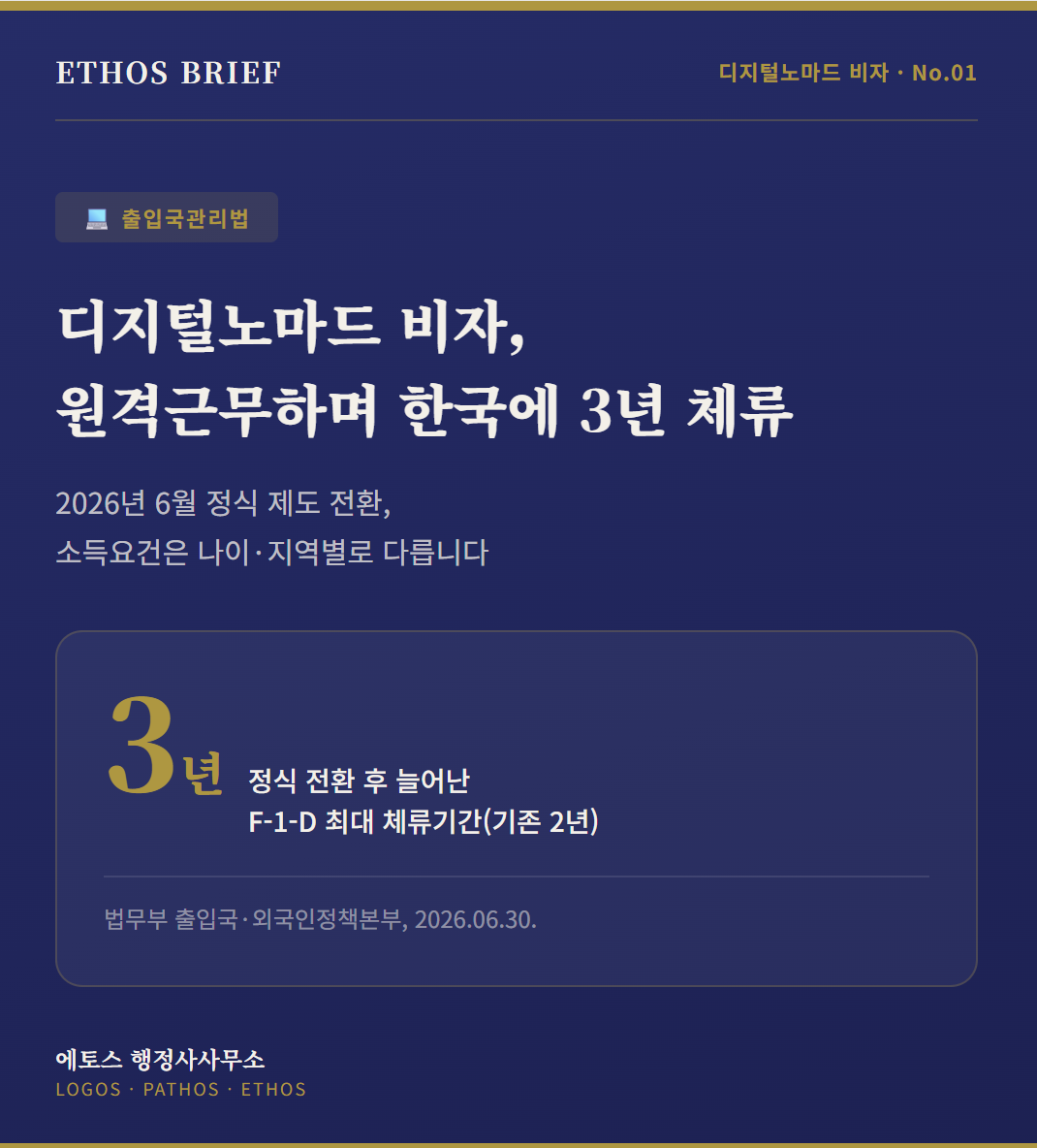
Korea’s Digital Nomad Visa, officially the F-1-D Workation Visa, allows eligible foreign remote workers and overseas business owners to stay in Korea while working remotely for non-Korean employers or businesses. Since June 30, 2026, the program has become a permanent visa category, with income requirements adjusted by age, region of stay, and family accompaniment, and the maximum stay extended to three years.
8/22/2026
A local government recommendation does not complete the Regional Specialized Visa process. After receiving the recommendation, you still need to manage the HiKorea appointment, document validity periods, tuberculosis test requirements, overseas criminal record documents, residence proof, employer documents, and your current visa expiration date before filing with immigration.
8/22/2026
For Korea’s Regional Specialized Visa, the local government recommendation comes before the immigration filing. If you do not check the region, local office, pre-registration or education requirement, remaining quota, and document validity period in the right order, your application may be delayed before it even reaches immigration.
8/22/2026
Korea’s Regional Specialized Visa system allows eligible foreign residents, skilled workers, and overseas Koreans to obtain or change status through a local government recommendation in participating population-declining regions. F-2-R, E-7-4R, and F-4-R may look similar, but each route has different eligibility, income, Korean language, employer, regional quota, and residence requirements.
8/22/2026
Korea’s 2030 Immigration Policy Future Strategy states that certified immigration application agencies will be used more actively for preliminary document review and electronic filing. This article explains who legally qualifies as an immigration application agency, why their role is becoming more important, and what foreign residents and employers should check before relying on visa filing support.
8/22/2026

On June 27, I gave another OASIS startup visa lecture for foreign entrepreneurs at the Korea Institute of Startup & Entrepreneurship Development in Yeoksam-dong. This session expanded the discussion beyond D-8-4 and D-10-2 to include D-9-4 for foreign sole proprietors, focusing on how visa strategy changes depending on business structure, activity type, investment, and future renewal planning.
8/22/2026
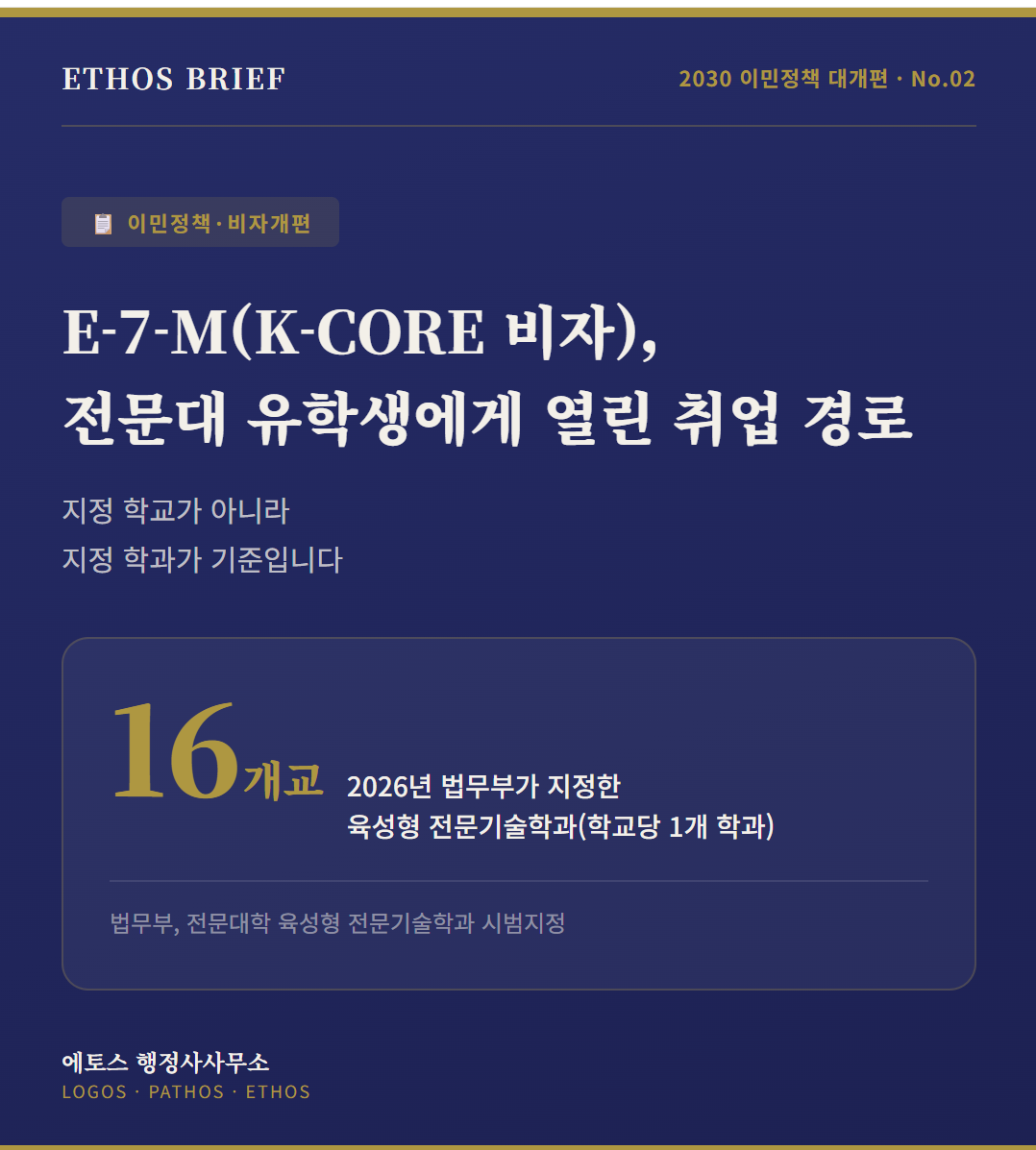
The E-7-M, also called the K-CORE visa, is a new mid-skilled employment route designed for international students who graduate from designated manufacturing-related departments at Korean junior colleges. It connects Korean-trained technical talent to regional manufacturing companies and may later lead to F-2 residence eligibility.
8/22/2026
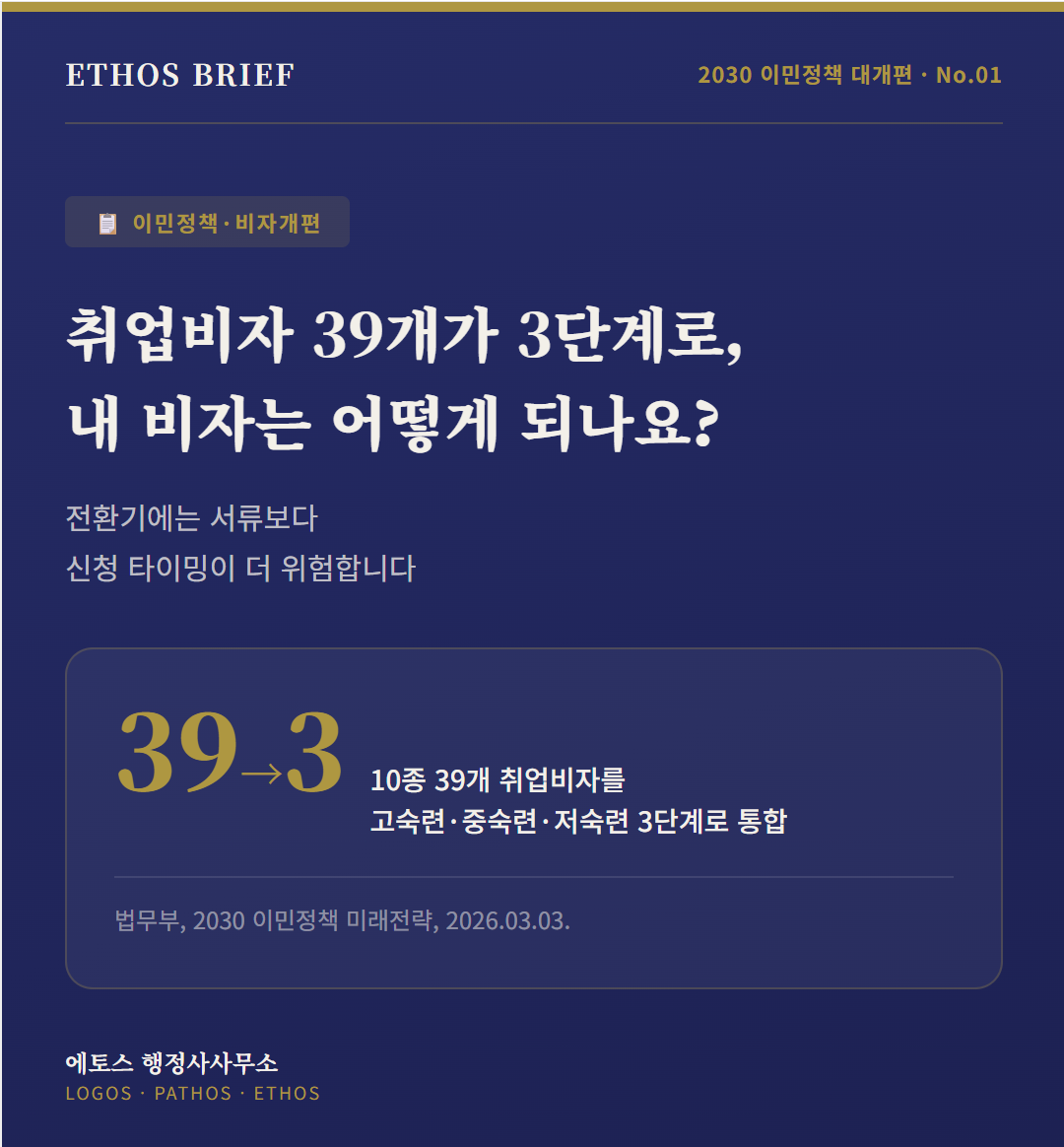
On March 3, 2026, Korea’s Ministry of Justice announced the “2030 Immigration Policy Future Strategy,” including a major plan to reorganize Korea’s complex work visa system into three levels: high-skilled, mid-skilled, and low-skilled. This article explains what E-series, D-series, and F-series visa holders, as well as employers hiring foreign workers, should review during the transition period.
8/22/2026
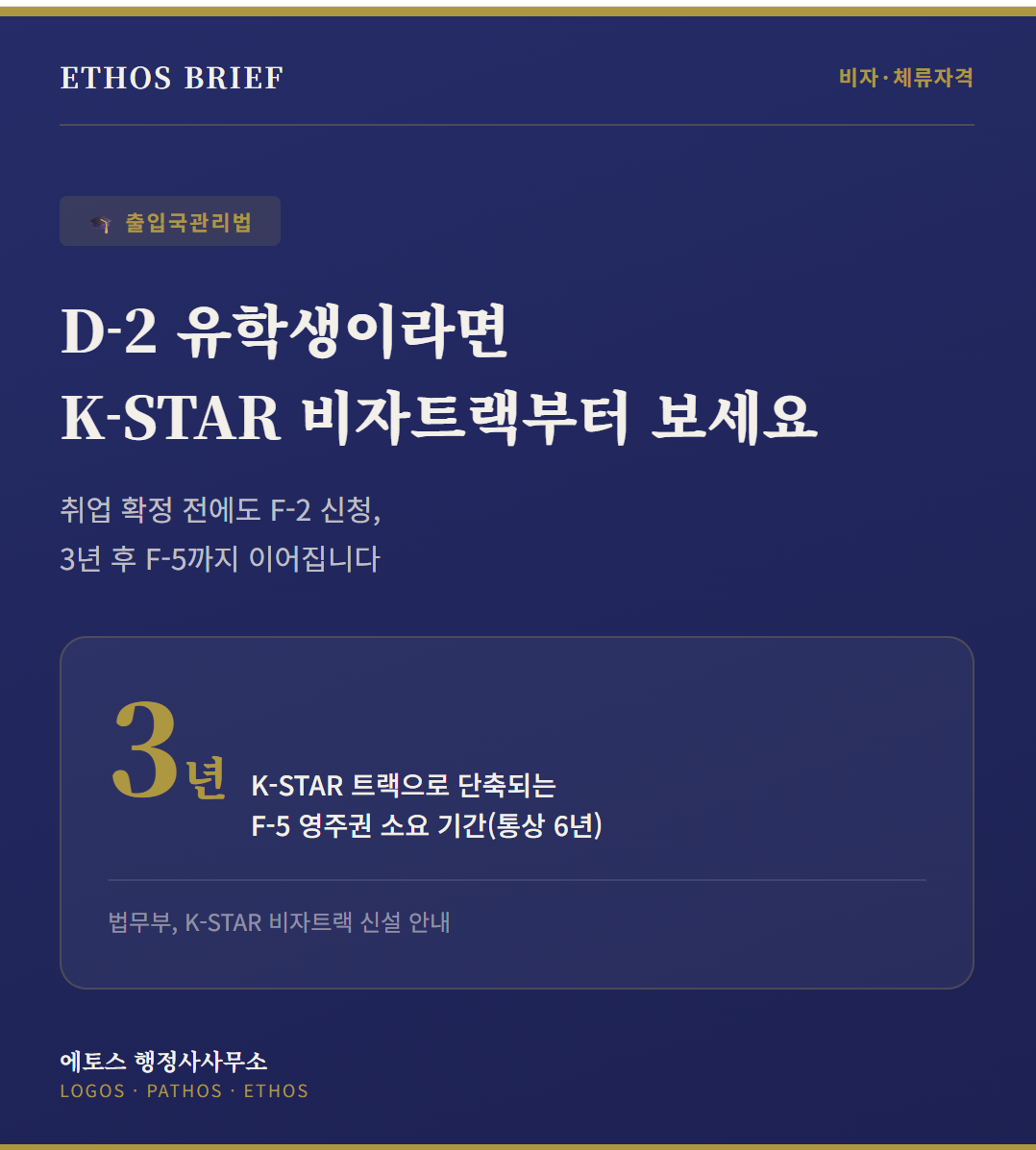
The K-STAR Visa Track is designed for outstanding international master’s and doctoral talent in science and technology fields who want to continue their research and career in Korea after graduation. With a president’s recommendation from a selected university, eligible applicants may apply for F-2 residence status even before employment is confirmed, and may later pursue F-5 permanent residence after meeting the required conditions.
8/22/2026
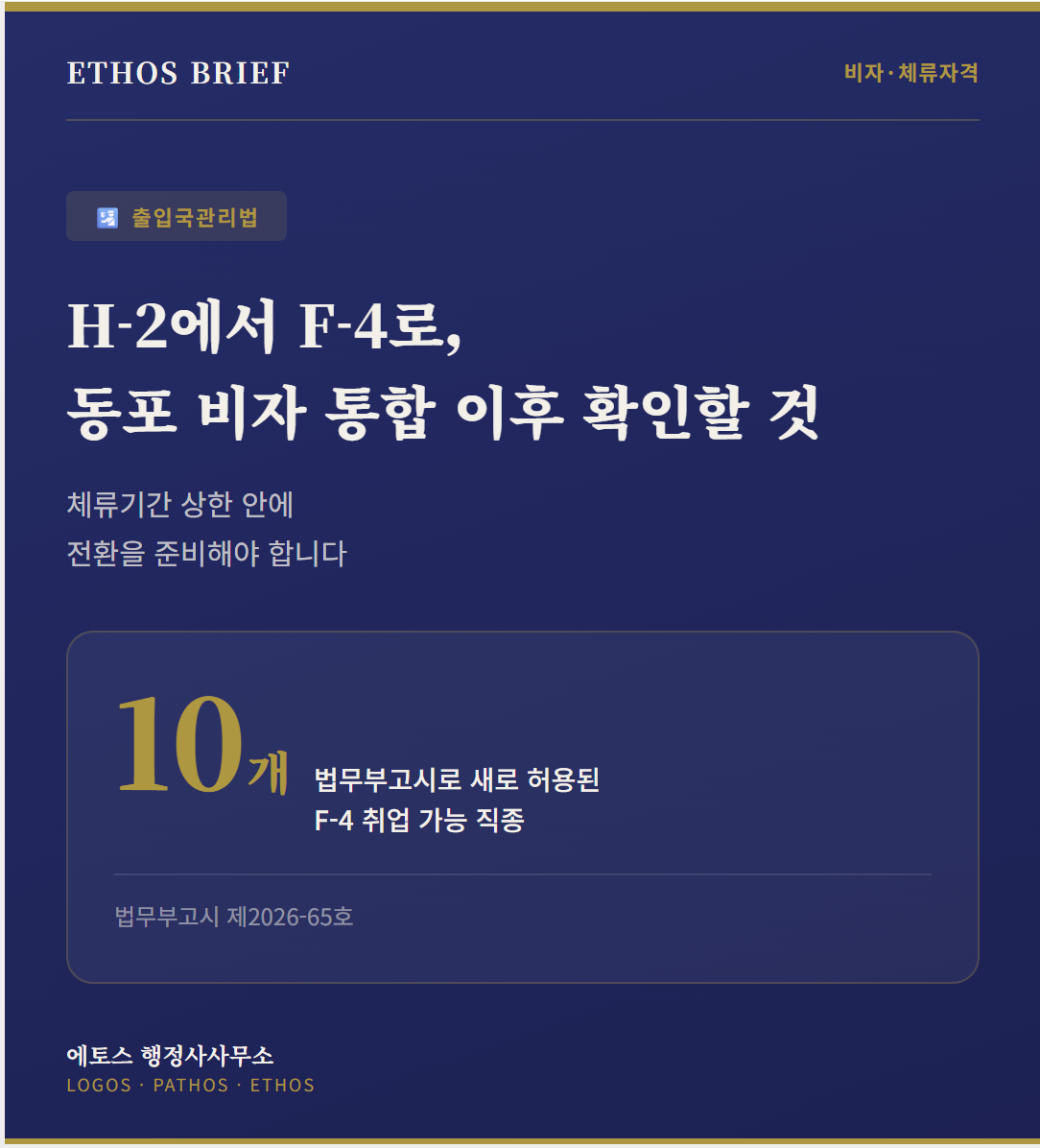
Since February 12, 2026, Korea has consolidated Overseas Korean residence statuses around the F-4 visa and suspended new H-2 Working Visit visa issuance. Existing H-2 holders should prepare their F-4 transition before their permitted stay expires, while employers should review visa status, job eligibility, online reporting, and related employment procedures.
8/22/2026
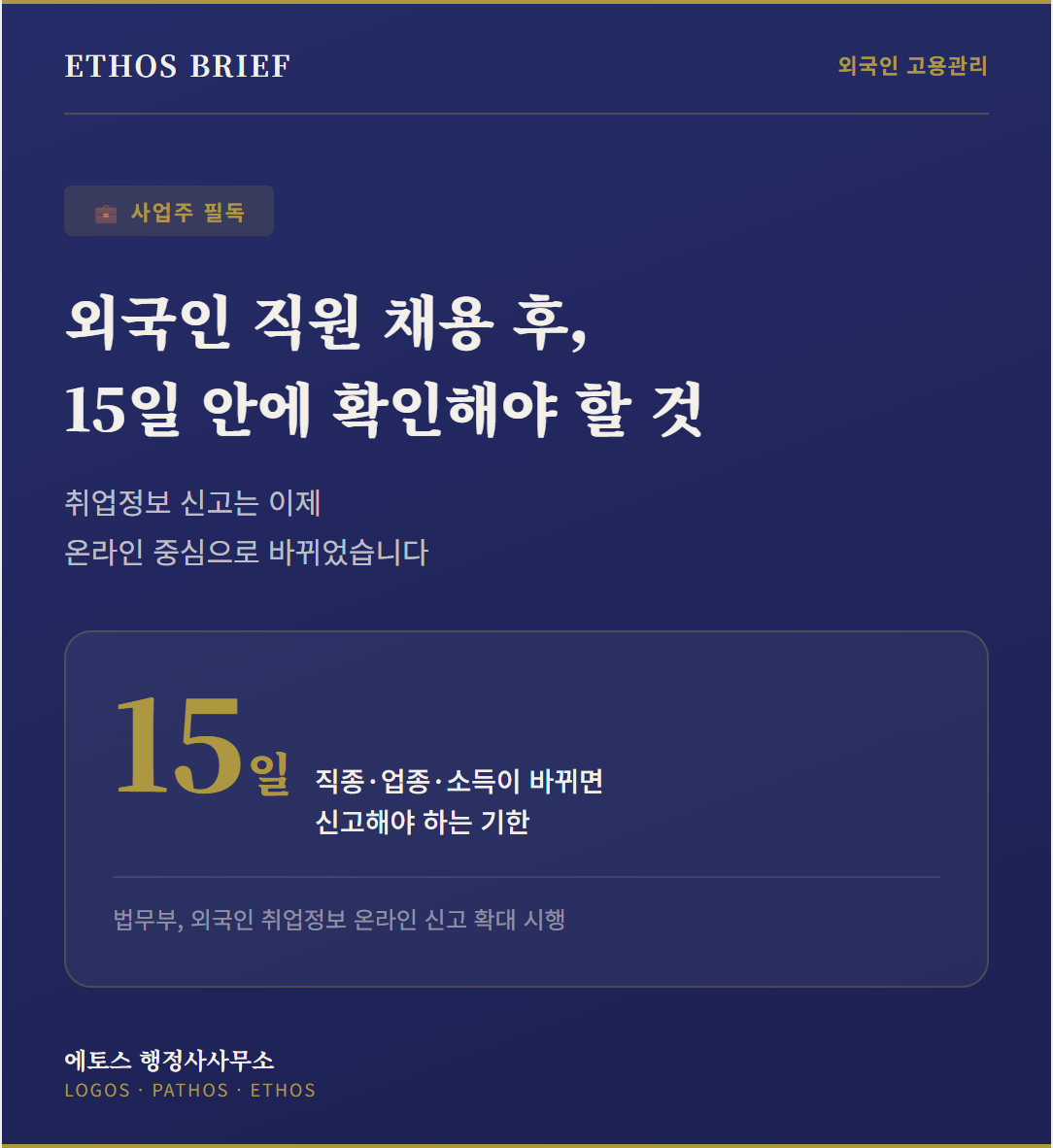
Since July 2026, foreign employment information reporting in Korea has shifted to an online-centered process. Employers hiring foreign staff should manage HiKorea accounts, initial employment information reports, changes in job category, industry, income, visa status, and expiration dates together.
8/22/2026

When inviting a foreign singer, actor, model, performer, or artist to Korea, the E-6 visa is not just a document checklist. The actual activity, contracting party, schedule, payment structure, and place of performance must be consistent across the contract, invitation letter, schedule, and application materials.
8/22/2026

At the OASIS Program lecture, the key message was clear: a foreign founder’s startup visa strategy should not stop at first issuance. D-8-4, D-10-2, D-9-1, and other startup-related visa routes must be planned together with business structure, incorporation, intellectual property, operating records, revenue, employment, and renewal evidence.
8/22/2026
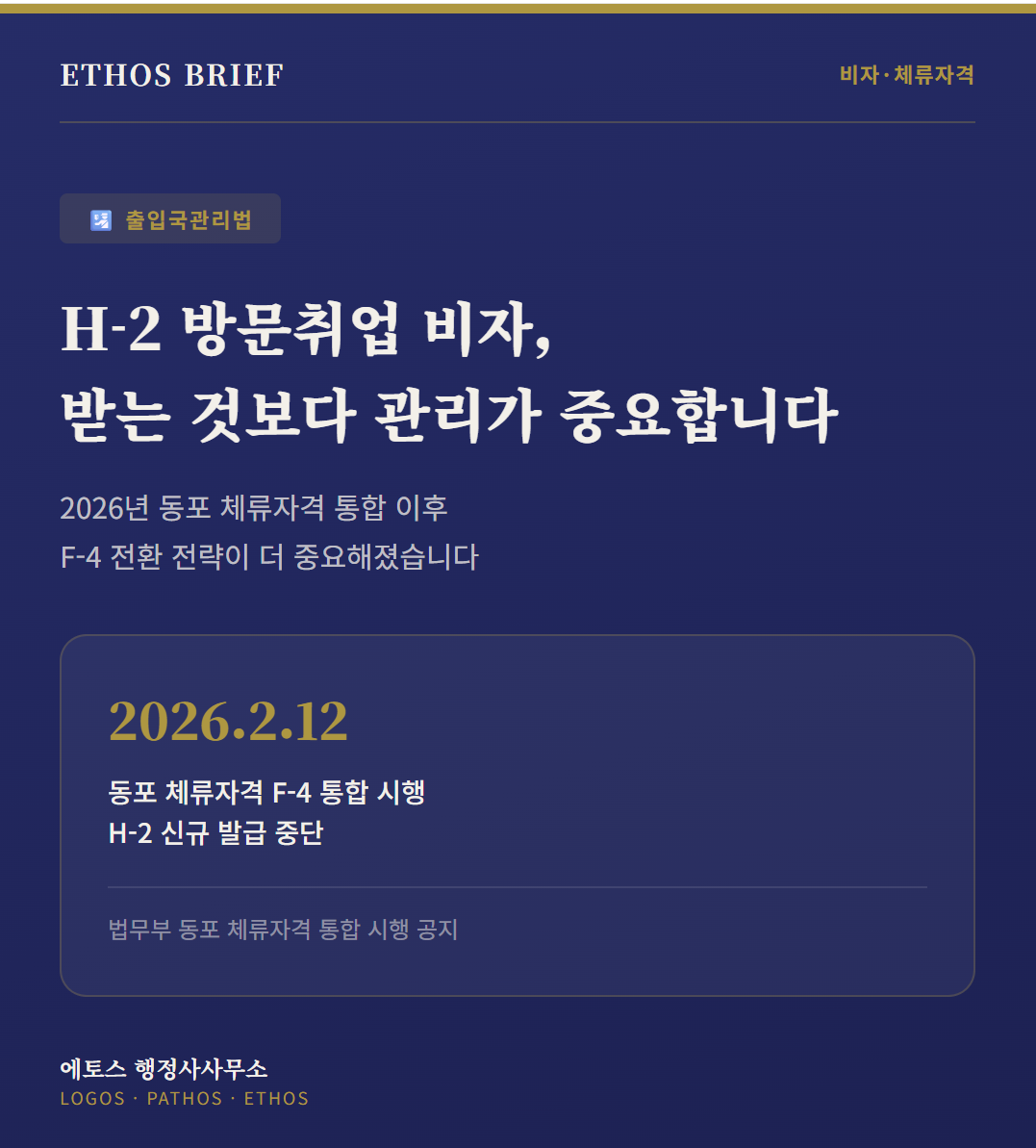
The H-2 Working Visit visa is not just something to receive and forget. Existing H-2 holders must carefully manage employment activity, stay period, violation history, and possible transition to F-4, especially after Korea’s 2026 Overseas Korean status consolidation.
8/22/2026
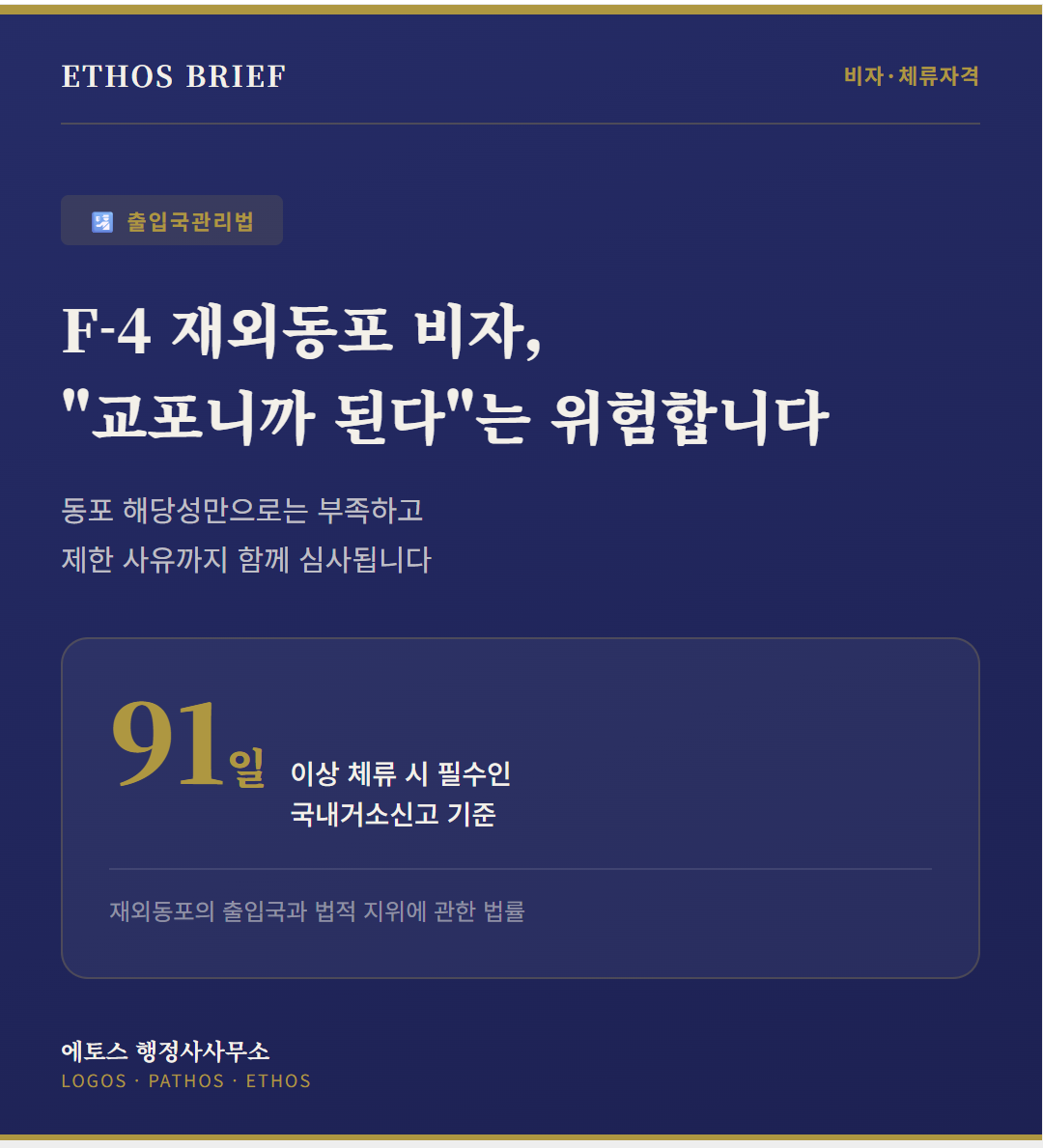
The F-4 Overseas Korean visa is not automatically granted simply because someone has Korean heritage. Applicants must prove Overseas Korean eligibility, nationality history, family relationship links, and must also review military service, criminal records, immigration violations, residence reporting, and employment restrictions.
8/22/2026
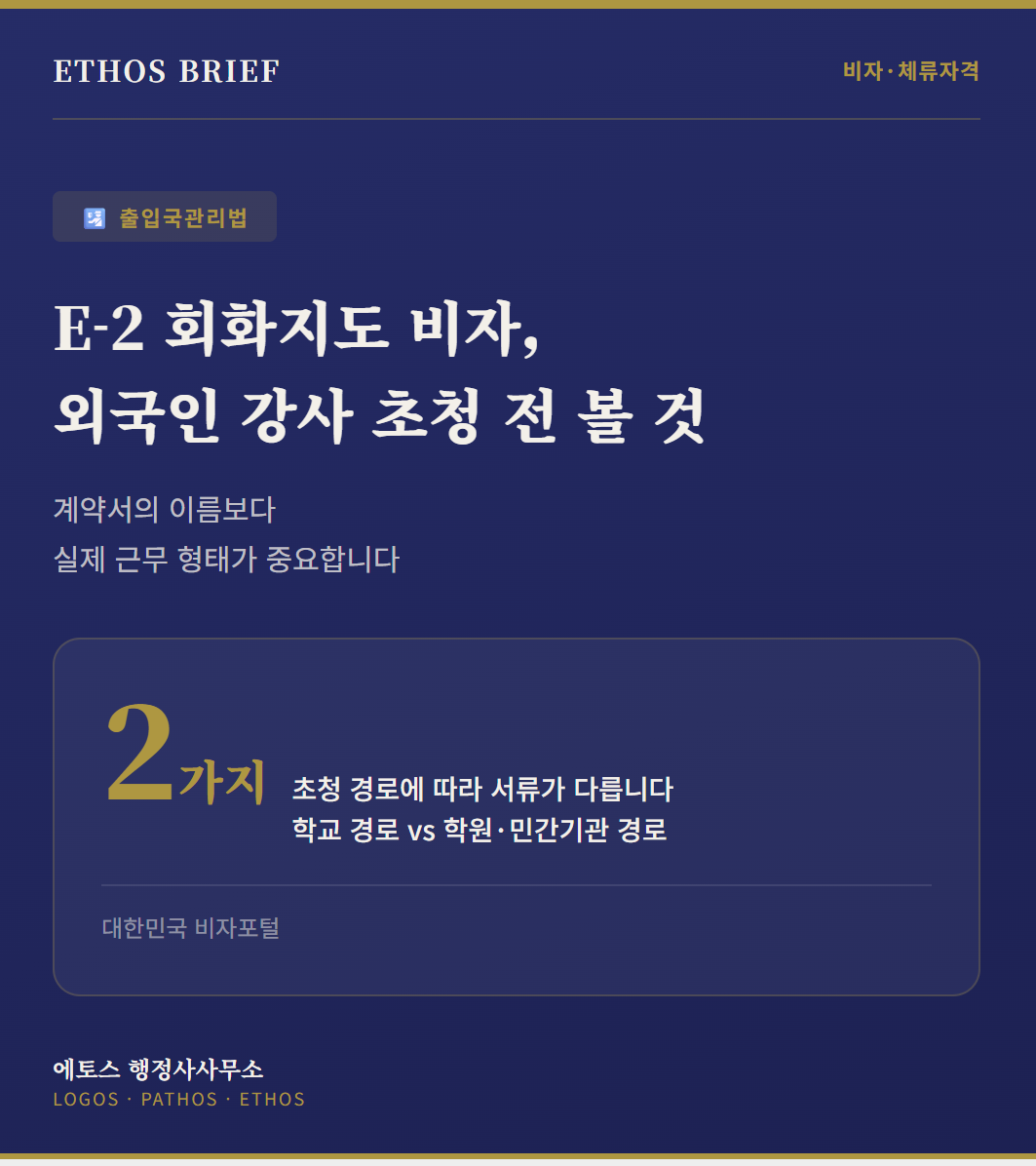
The E-2 Foreign Language Instructor visa is not simply an “English teacher visa.” It is an employment-based status of stay reviewed together with the sponsoring institution, teaching route, employment contract, actual workplace, and post-entry registration duties.
8/21/2026
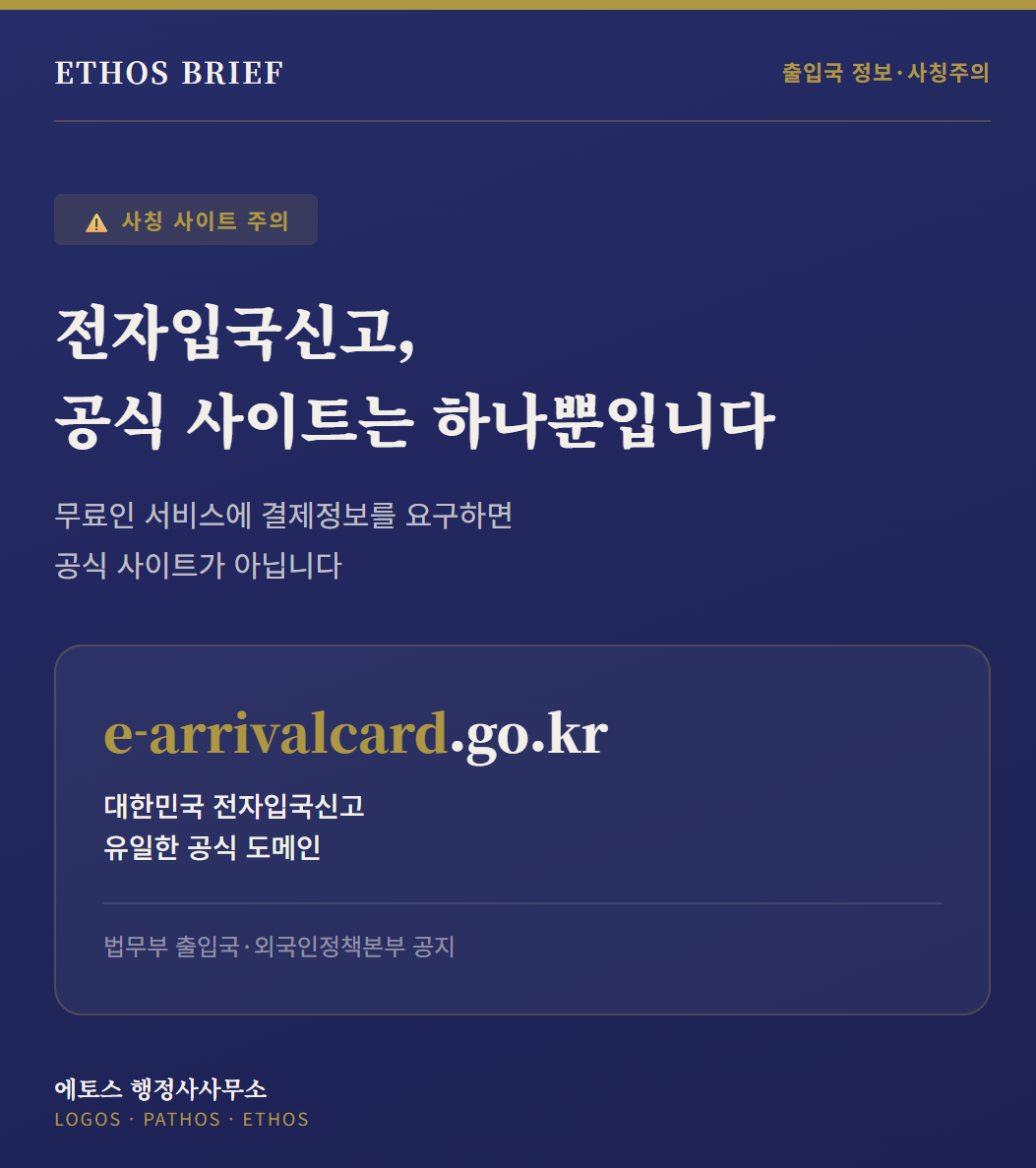
Korea’s e-Arrival Card is free of charge, and the only official website is e-arrivalcard.go.kr. Any website asking for payment information, urgent processing fees, or “official” services may be impersonating the official service, so travelers should first distinguish e-Arrival Card from K-ETA and verify the official domain before entering passport or card details.
8/21/2026
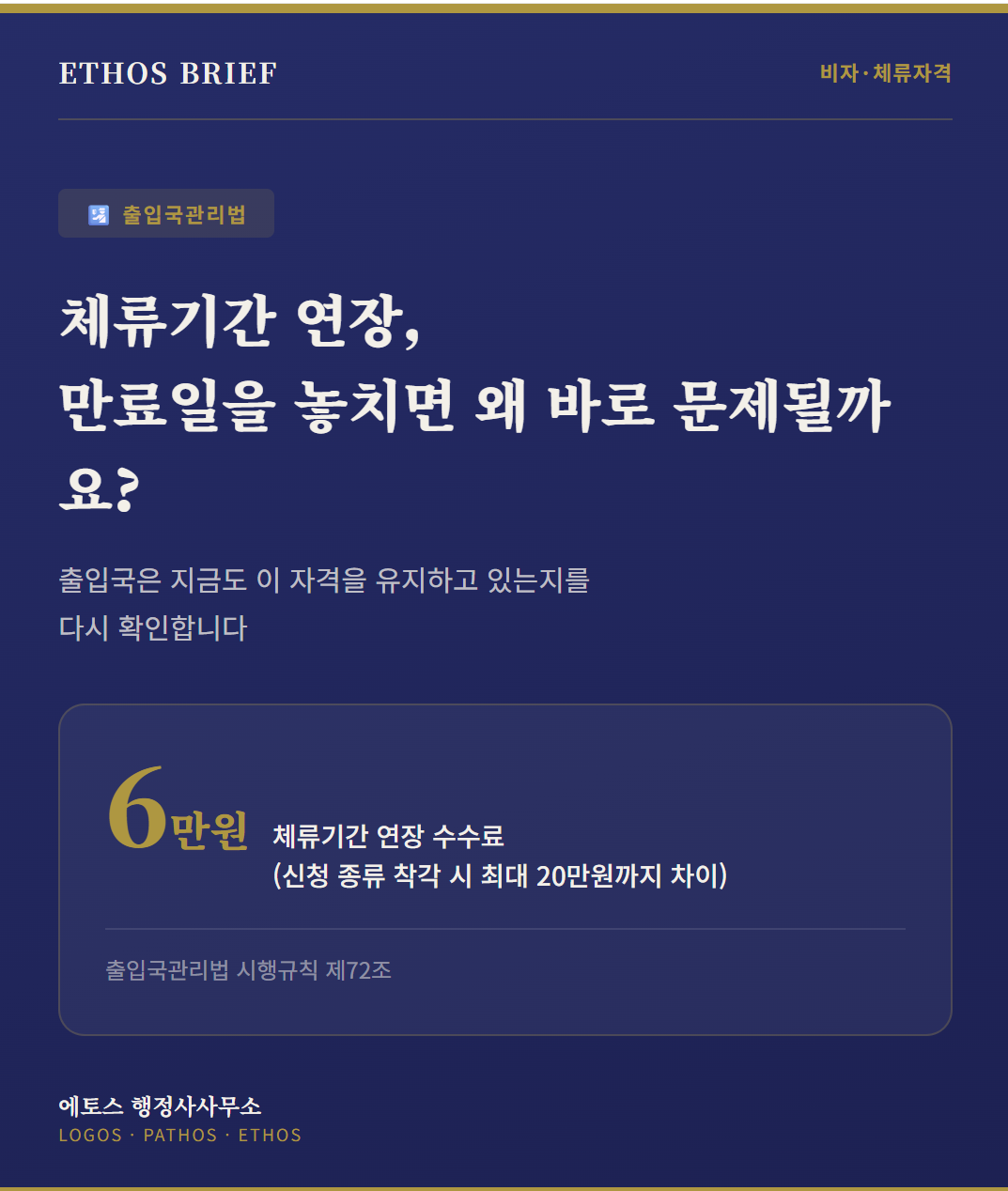
Extension of stay in Korea is not a simple visa sticker renewal. It is a review of whether the foreign resident still qualifies for their current status of stay. Missing the expiration date, submitting weak residence proof, or failing to show continued eligibility can lead to supplementation requests, denial, penalties, or overstay issues.
8/21/2026
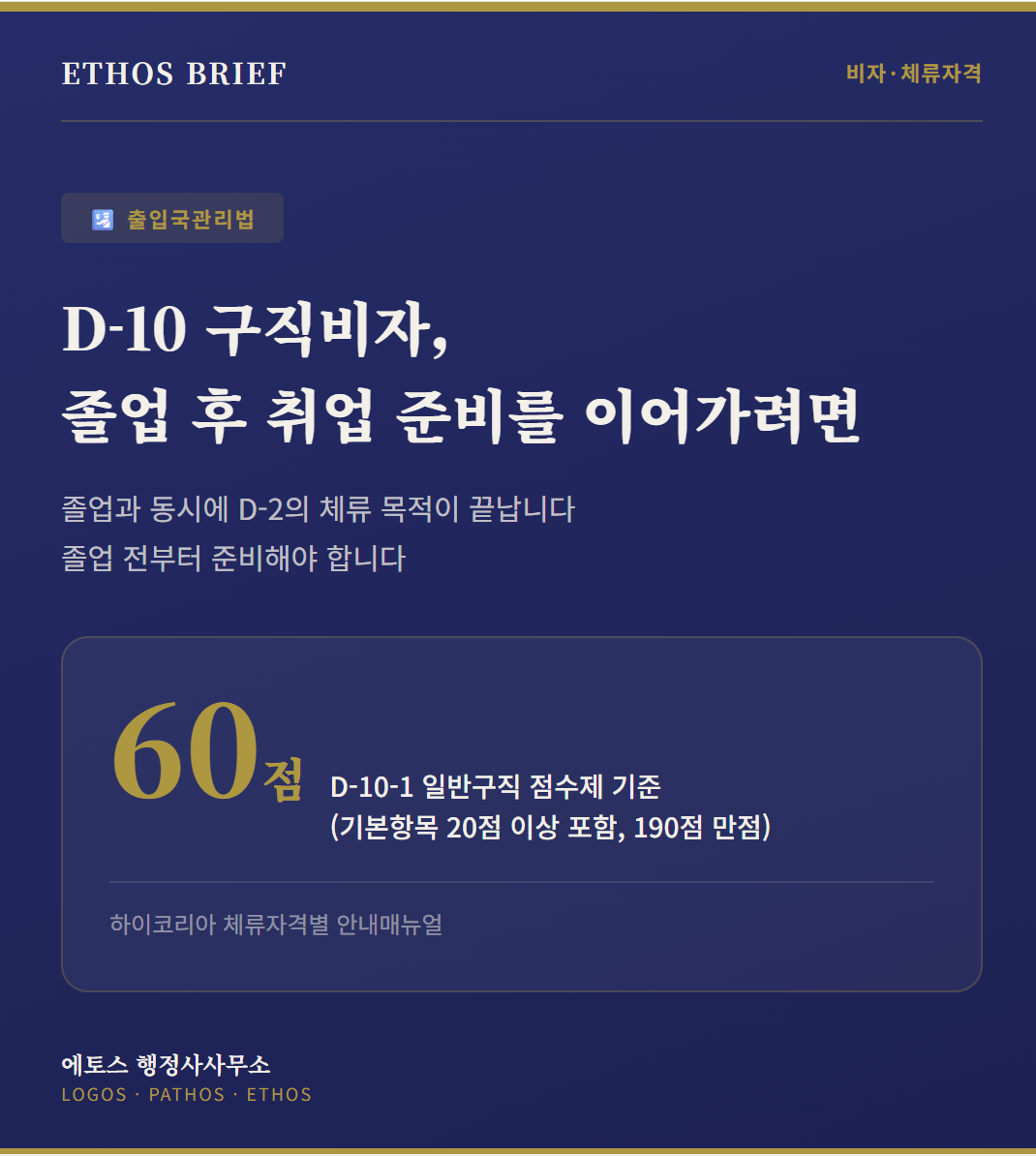
The D-10 job-seeking visa allows eligible foreign graduates and professionals to stay in Korea legally while preparing for employment, internships, or technology startup activities.
8/21/2026
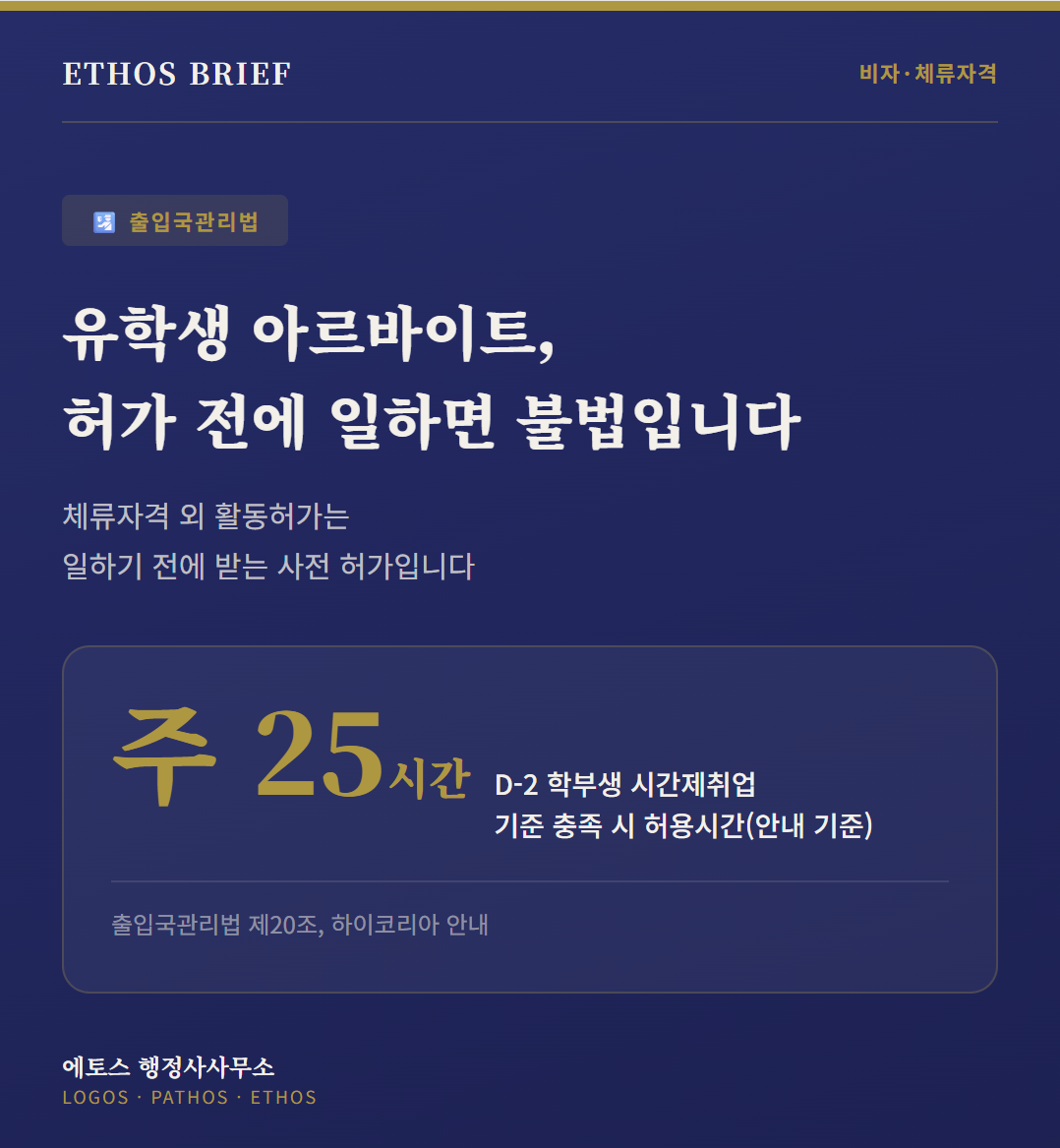
If a D-2 international student works part-time at a convenience store, or if a foreign national does work outside the scope of their current visa, prior permission for activities outside the status of stay may be required. Working before approval can be treated as unauthorized employment and may lead to deportation, fines, and disadvantages in future visa applications.
8/21/2026
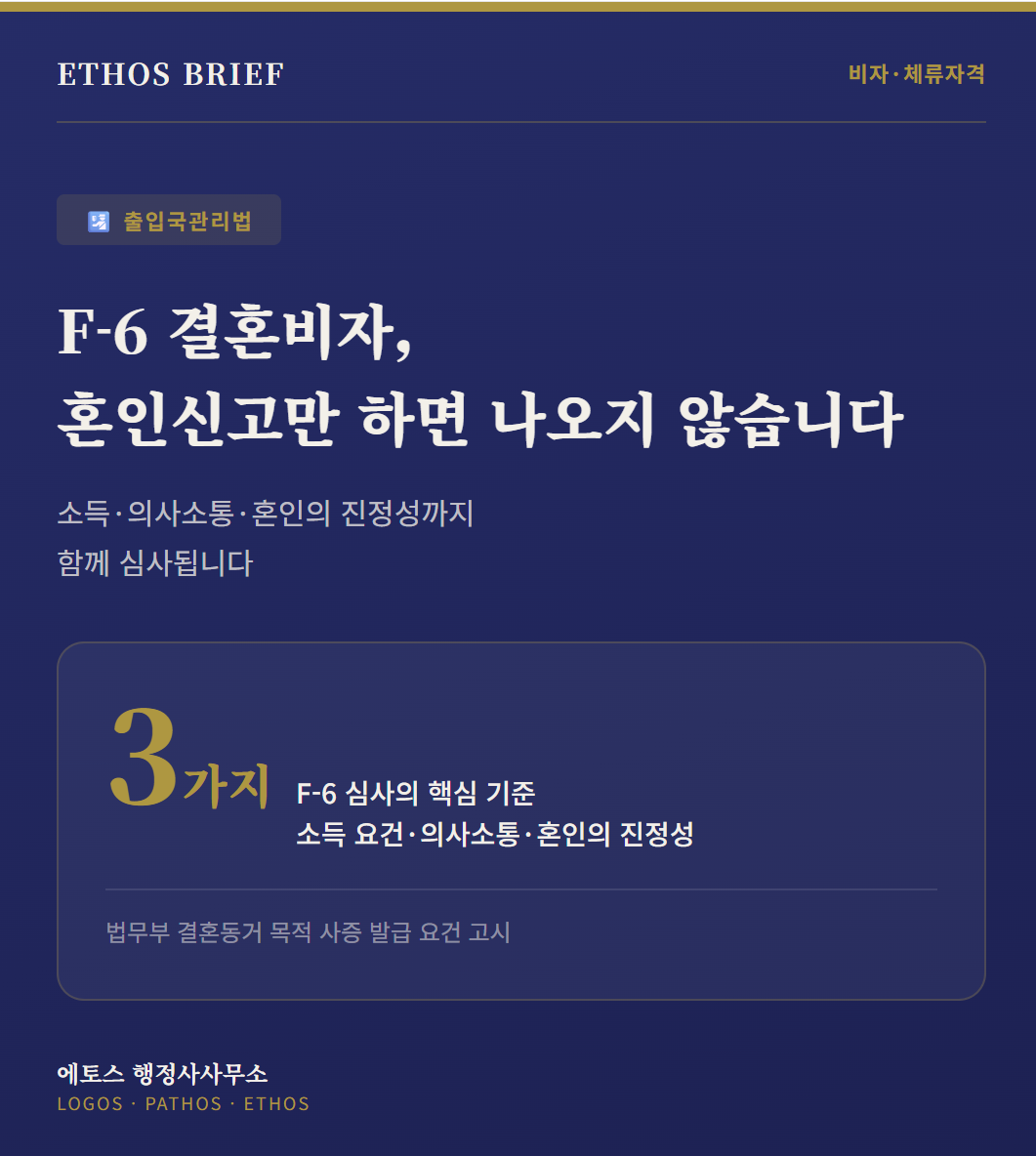
The F-6 marriage visa is not issued automatically just because a marriage has been registered. Income requirements, communication ability, genuineness of marriage, housing conditions, and invitation restriction grounds are reviewed together, so the document structure should be prepared carefully from the beginning before inviting a foreign spouse.
8/21/2026
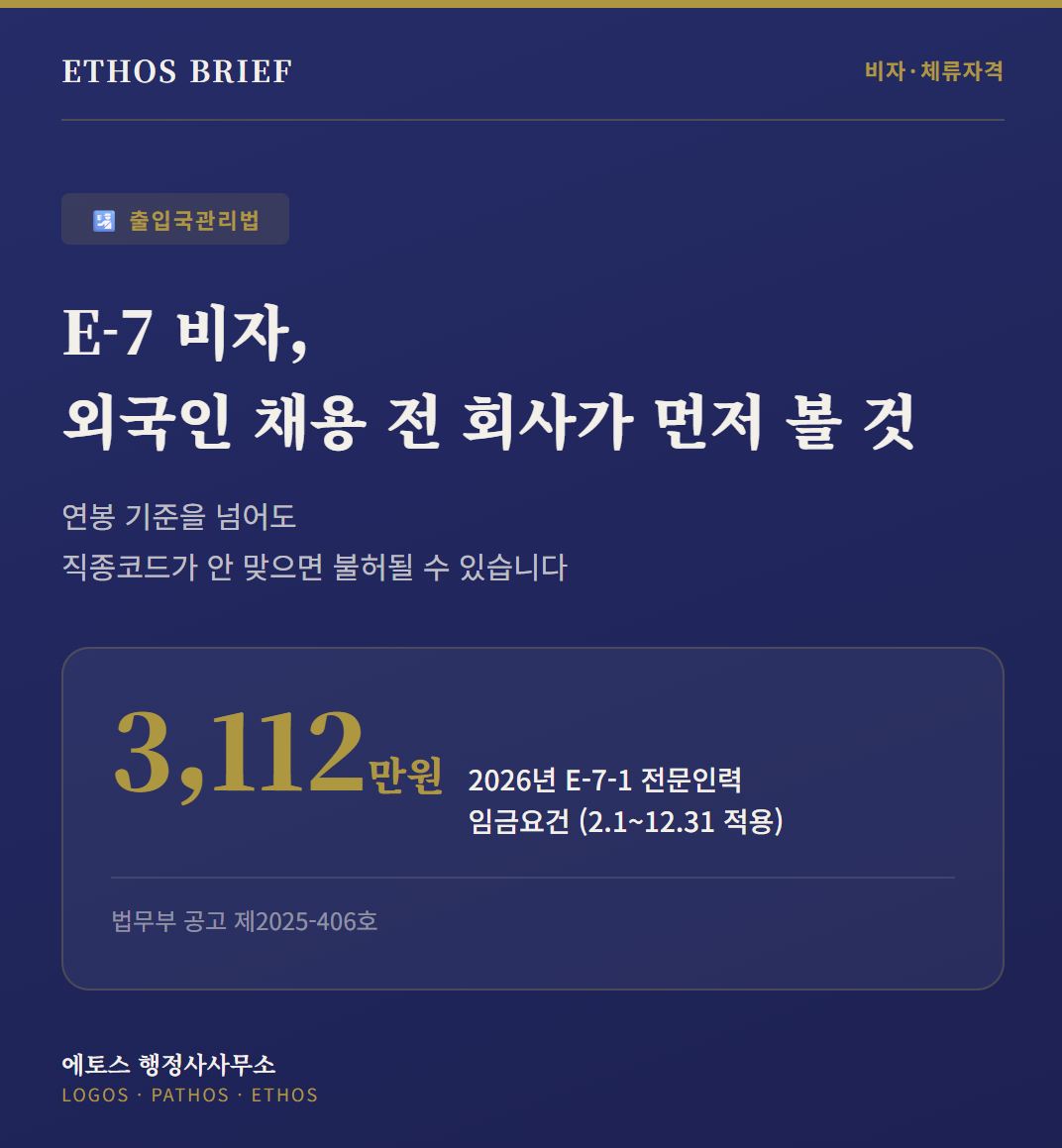
The E-7 Specially Designated Activities visa is one of the most common work visas used when Korean companies hire foreign professionals. However, since 2026, wage requirements differ by E-7 subtype, and applications can be refused if the job code, education, experience, company requirements, or employment justification do not match.
8/21/2026
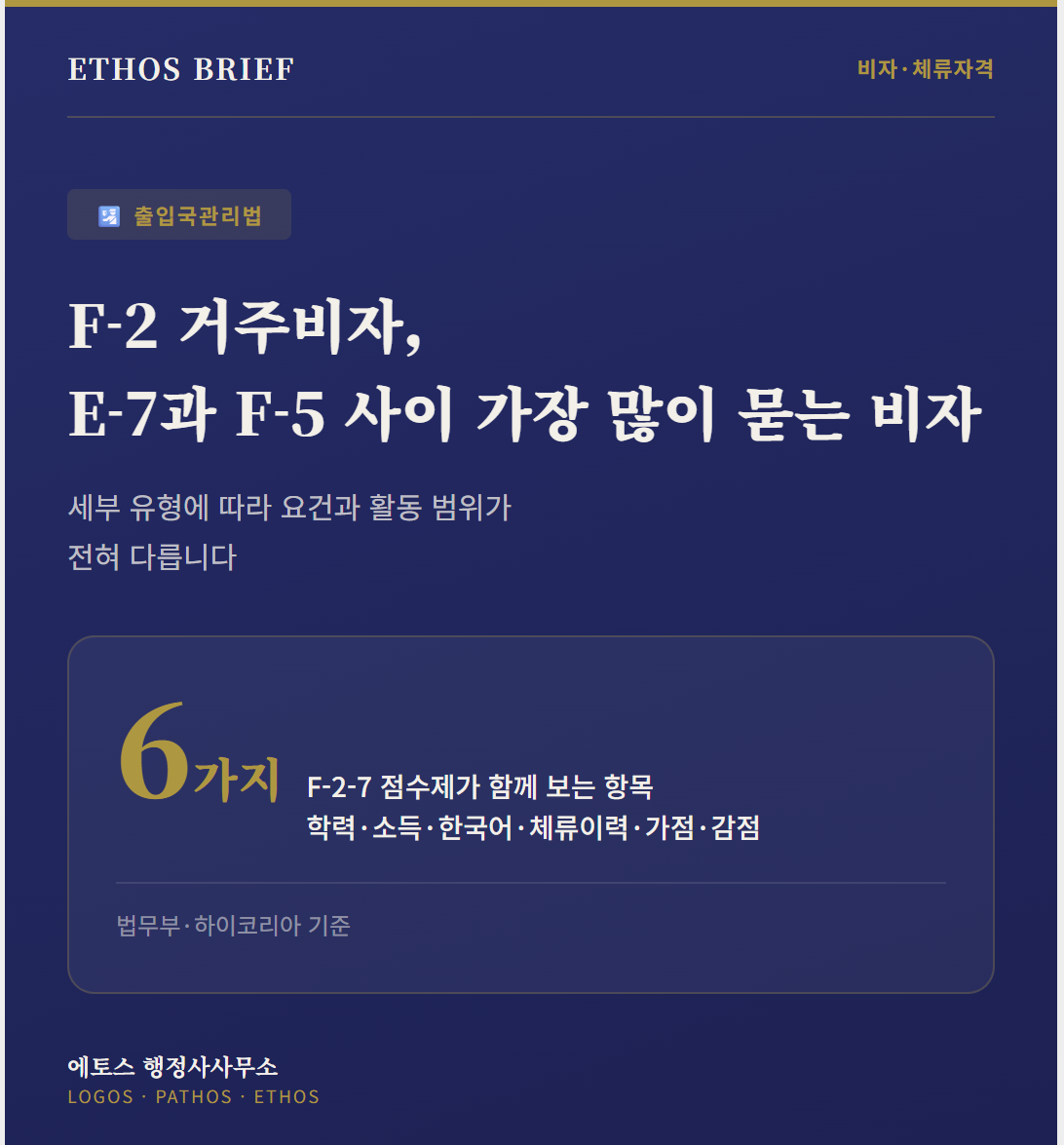
The F-2 residence visa is an important status of stay for foreigners who want broader economic activity and long-term residence in Korea between employment visas such as E-7 and permanent residence F-5. However, each F-2 subtype has different requirements, and the F-2-7 points system reviews education, income, Korean language ability, residence history, bonus points, and deductions together.
8/21/2026
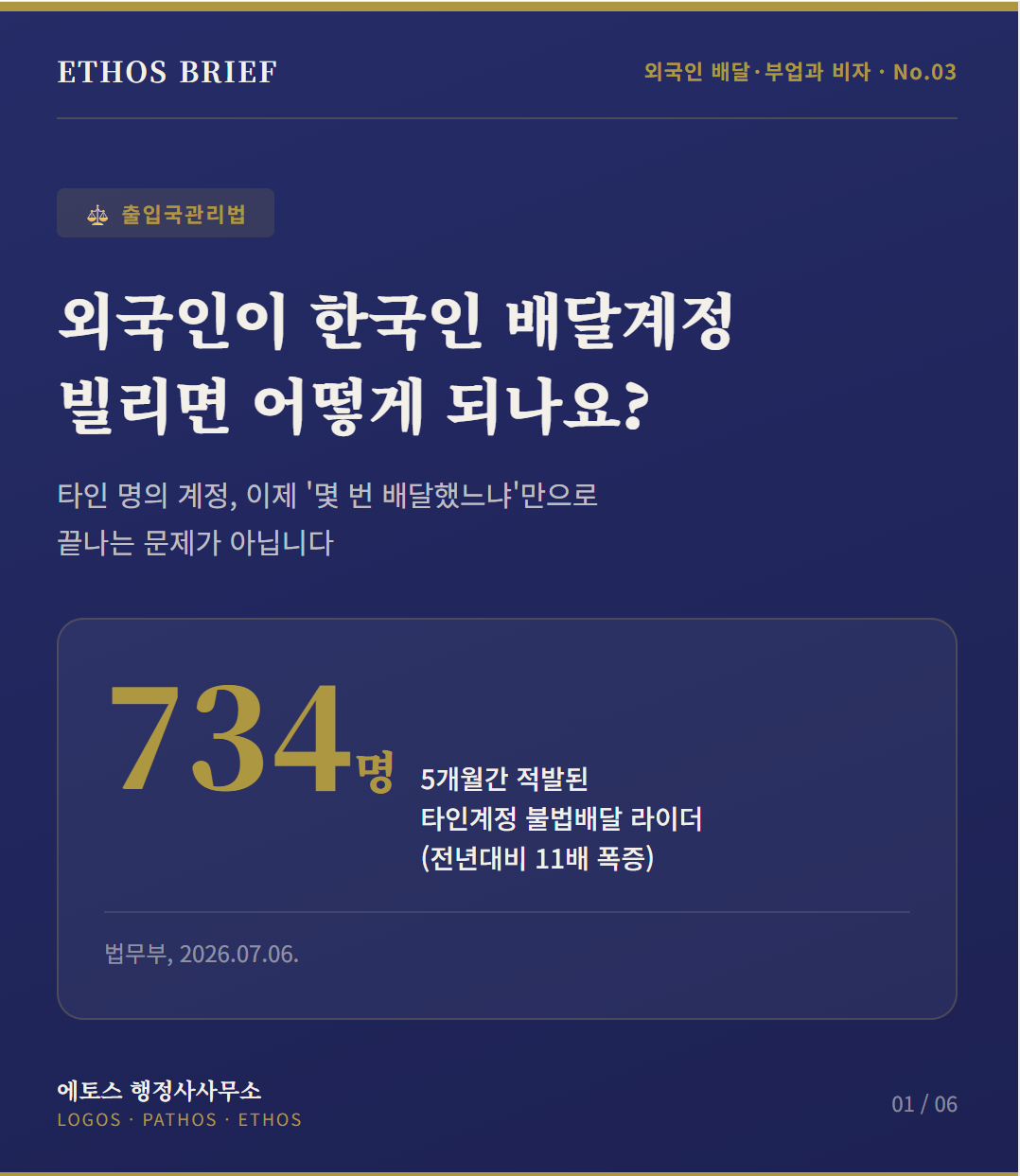
Foreign nationals using Korean-name delivery accounts may face immigration issues beyond simple account sharing. In third-party delivery account cases, immigration authorities may review the actual rider, account holder, payment flow, account-use fees, prior statements, and current procedural stage. If immigration has already contacted you, organizing your visa status, account details, settlement records, transfer history, and received documents is the first step.
8/21/2026
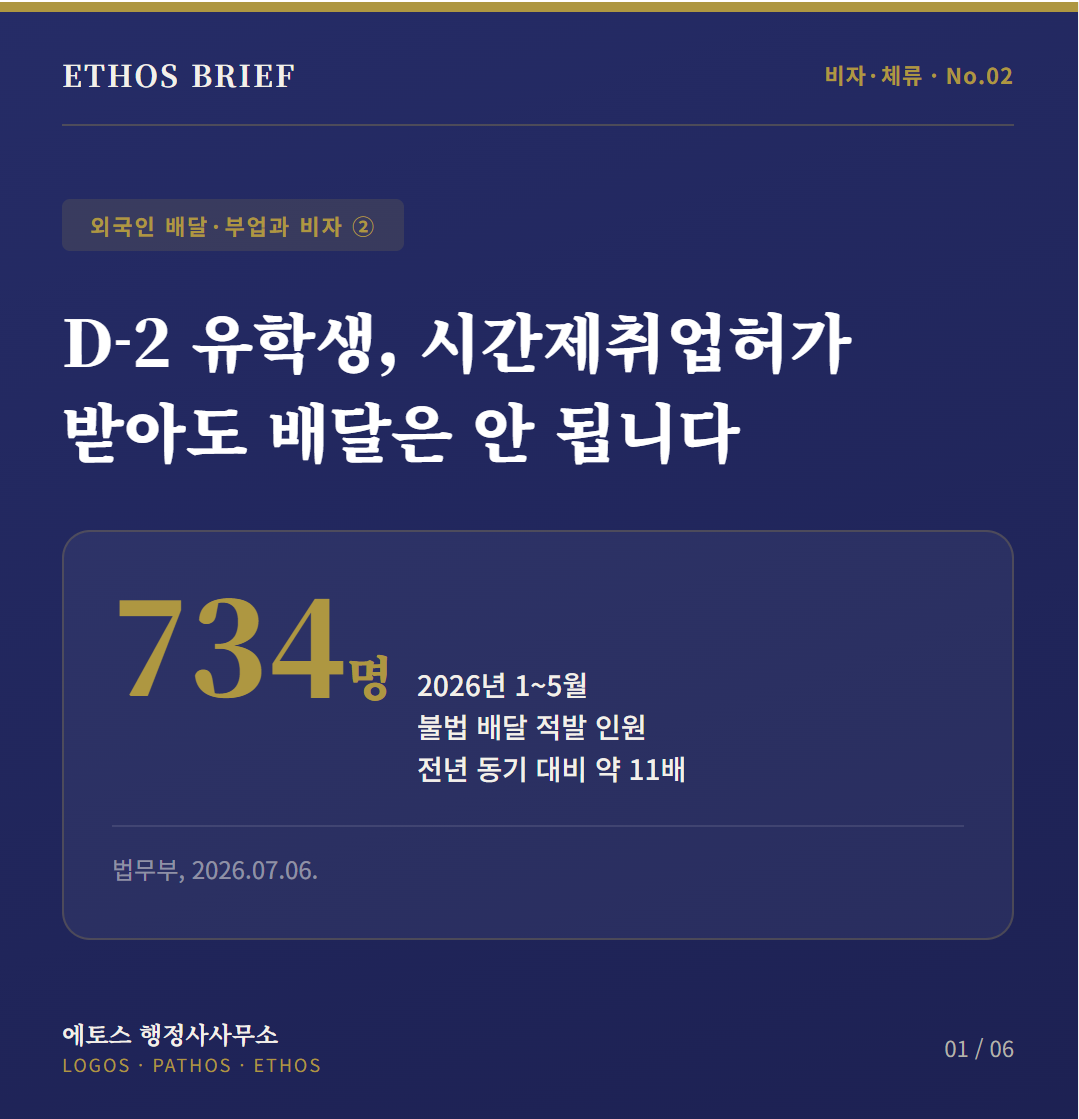
물론입니다. 홈페이지 영문 목록/카드용 발췌문은 이렇게 쓰는 게 가장 자연스럽습니다. D-2 international students cannot work as delivery-platform riders simply because they have permission for part-time employment. This article explains Korea’s current rules on student work, the Ministry of Justice’s 2026 enforcement against illegal foreign delivery activity, and what immigration issues should be reviewed if a student has already worked as a delivery rider.
8/19/2026
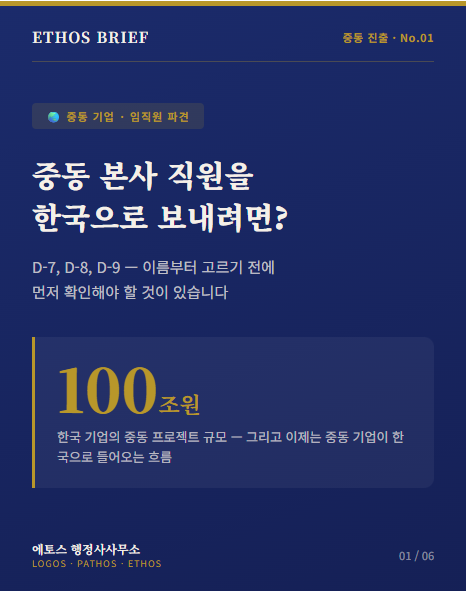
Middle Eastern companies from Saudi Arabia, the UAE, and other Gulf countries must carefully distinguish between D-7, D-8, and D-9 visa categories when dispatching executives or employees to Korea. This article explains how to review D-7 intra-company transfer, D-8 foreign investment, and D-9 trade management visas based on the company’s entry structure, funding structure, role of the dispatched employee, and practical documentation issues such as Arabic-to-English name variations.
8/19/2026

If you are notified to appear for an immigration violation review, or if you receive a departure order or deportation order in Korea, the first step is to identify the exact type of disposition and the date you received it. This article explains the difference between recommendation for departure, departure order, and deportation order, and outlines when administrative appeal and suspension of execution may be considered.
8/19/2026
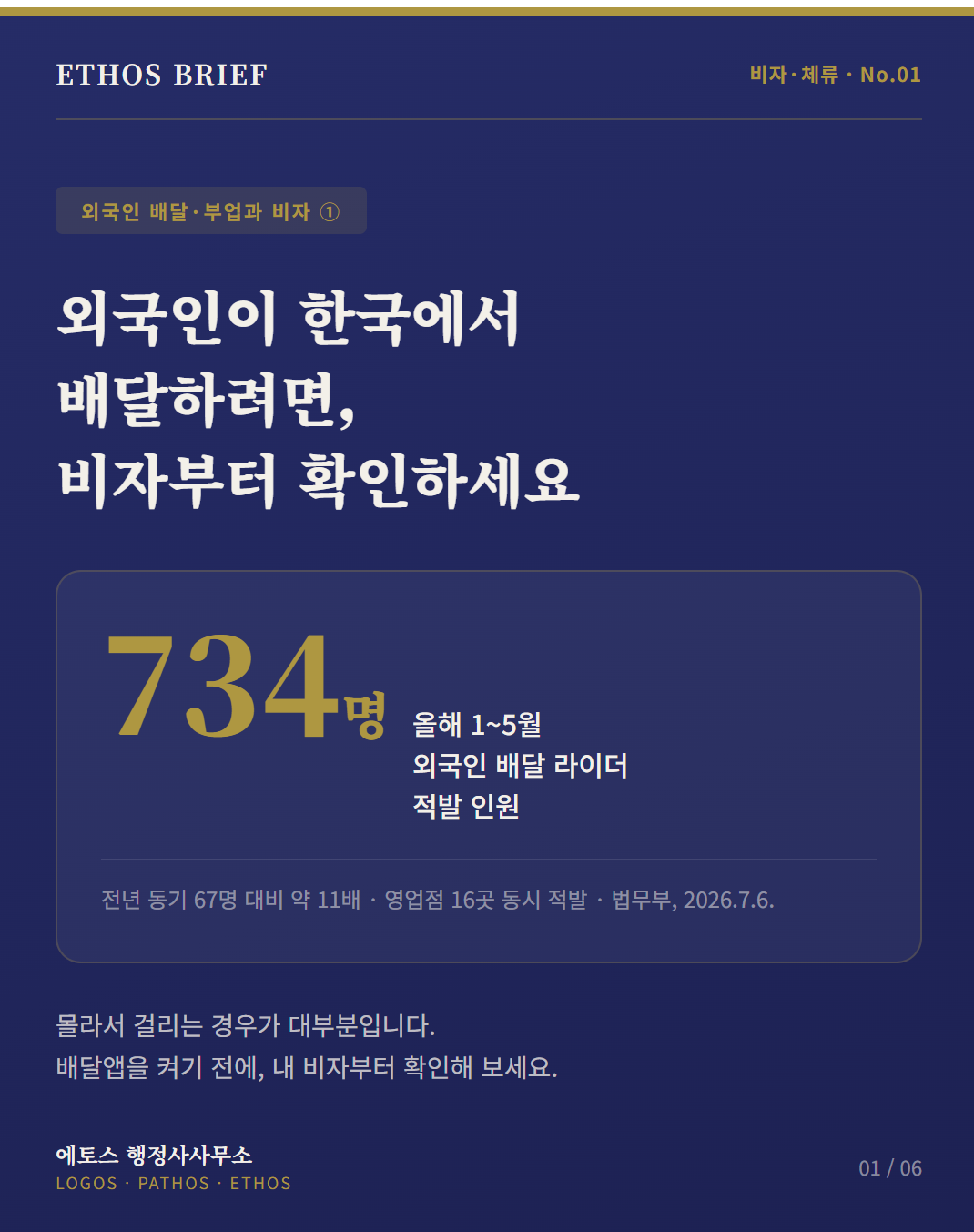
ForeignDeliveryRider, DeliveryRiderKorea, KoreaVisa, WorkVisaKorea, ForeignWorkerKorea, UnauthorizedEmployment, KoreaImmigration, D2Visa, E9Visa, F2Visa, F4Visa, F5Visa, F6Visa, PartTimeWorkKorea, InternationalStudentsKorea, DeliveryJobKorea, CoupangEats, Baemin, DeportationKorea, ImmigrationAppeal
8/16/2026
Practical insights on visas, administrative appeals, and permits — delivered whenever a new post goes live.
You can unsubscribe anytime; your email is used only for the newsletter.
Have a question?
Columns are general guidance. Individual cases are reviewed after consultation.