Find a column by business decision
These topics can overlap; start with the question closest to your current decision.
AllVisa & Residency (56)Administrative Appeal (23)Contracts & Fact-finding (23)Licensing & Permits (57)Nonprofit & Company Formation (16)Other (12)
Licensing & Permits
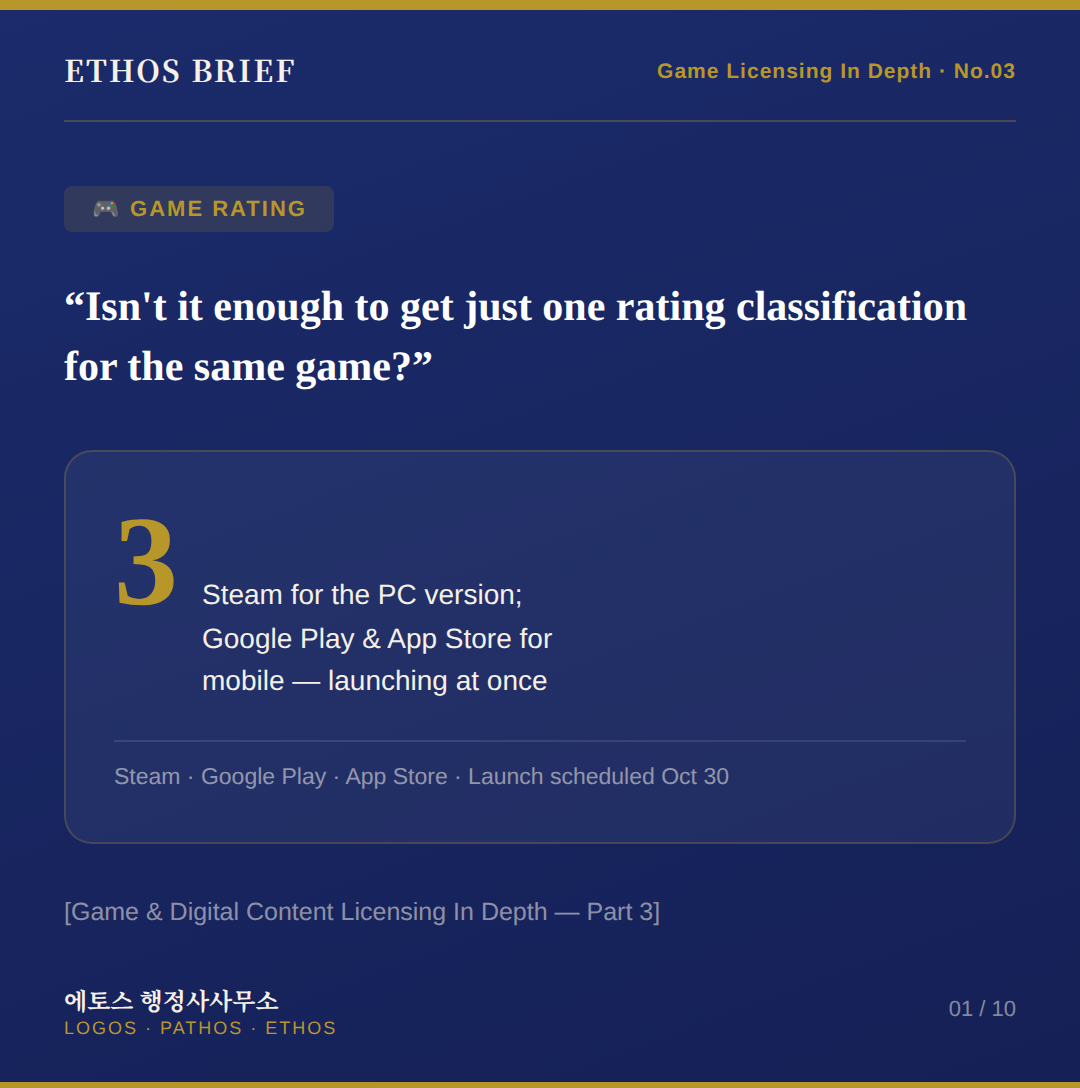
[Game & Digital Content Licensing ③] Where Should You Apply for a Game Rating in Korea? — Steam, Google Play, App Store, and Adults-Only Games
Planning to launch a game in Korea on Steam, Google Play, and the App Store? Learn how to identify the appropriate game rating authority, assess whether an existing rating can be reused, and complete platform-specific requirements for a simultaneous release. Copy excerpt
#Game Rating Korea#Korean Game Rating#Game Rating Application
9/20/2026Sangjin Ji, Administrative Attorney
Visa & Residency
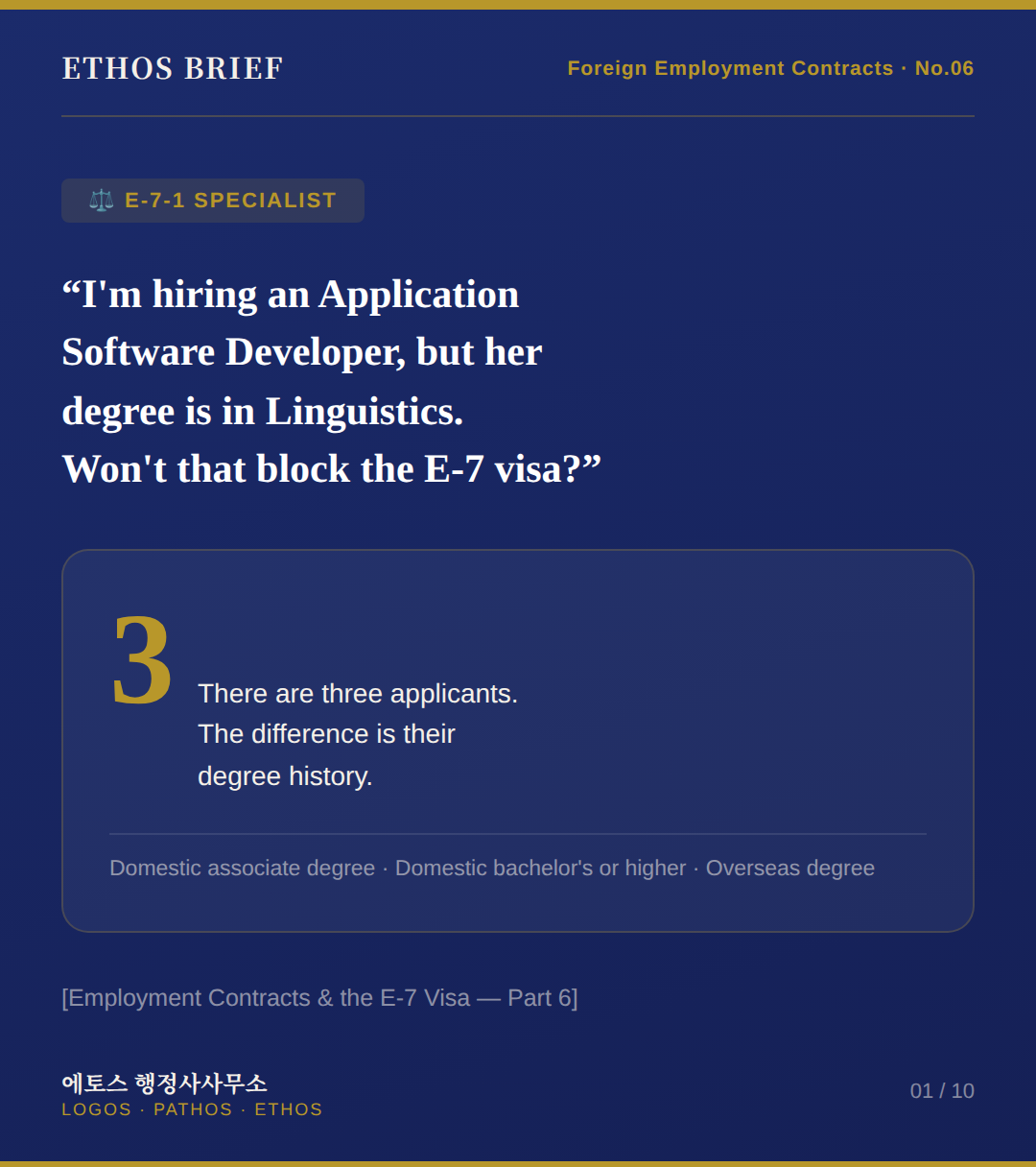
[Foreign Employment Contracts and the E-7 Visa ⑥] Can You Obtain an E-7 Work Visa with an Unrelated Degree? — Education, Work Experience, and Job Duties
Can you obtain an E-7 work visa in Korea if your degree is unrelated to the job? Learn how eligibility differs for Korean bachelor’s degree holders, associate degree holders, and overseas graduates. This guide also covers relevant work experience, overseas talent exemptions, and employment contract requirements.
#E-7 Visa Korea#E-7-1 Visa#Korea Work Visa
9/18/2026Sangjin Ji, Administrative Attorney
Licensing & Permits
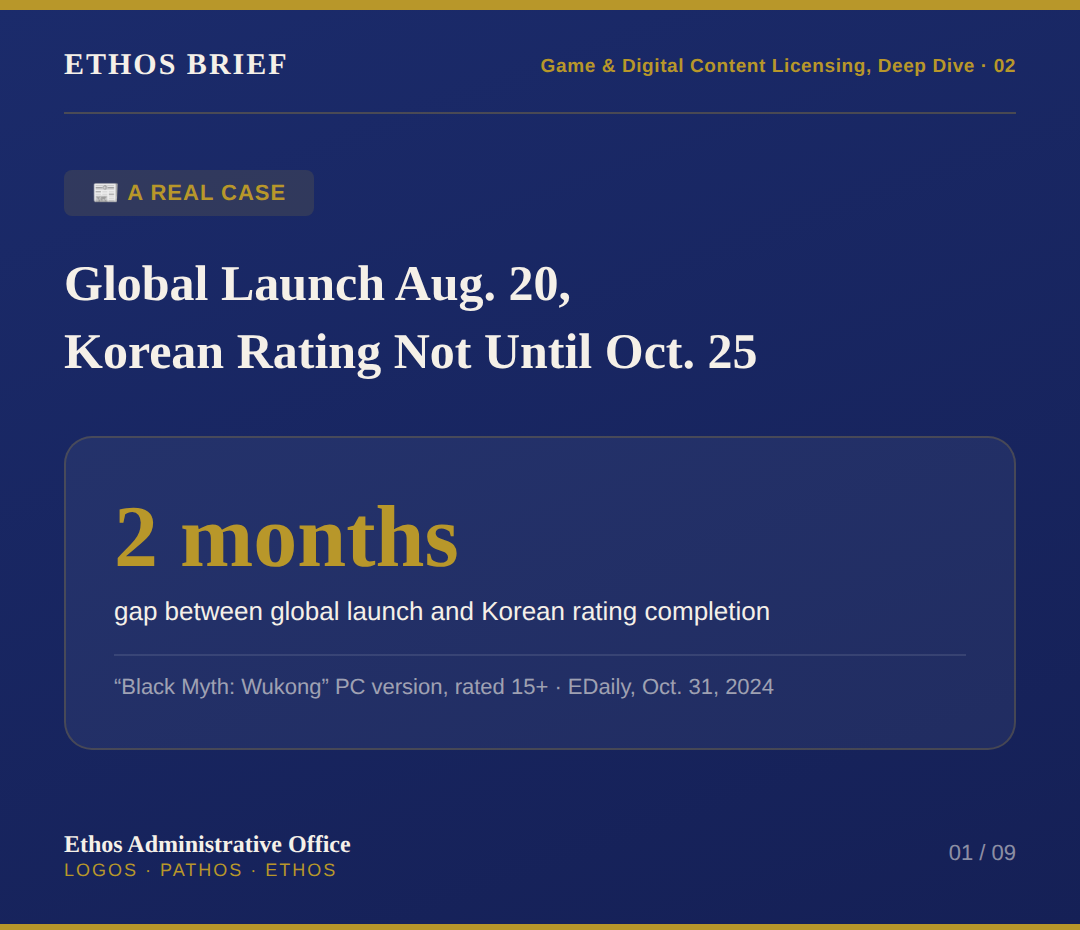
When Should You Apply for a Game Rating in South Korea? — CBT, Early Access, and Pre-Launch Compliance
When should you apply for a game rating in South Korea? Learn about application timing, the 15-day review period, CBT and OBT requirements, free demos, Early Access, and the final compliance checks developers and publishers should complete before launch.
#Game Rating Korea#Korean Game Rating#Game Rating Application
9/17/2026Sangjin Ji, Administrative Attorney
Visa & Residency
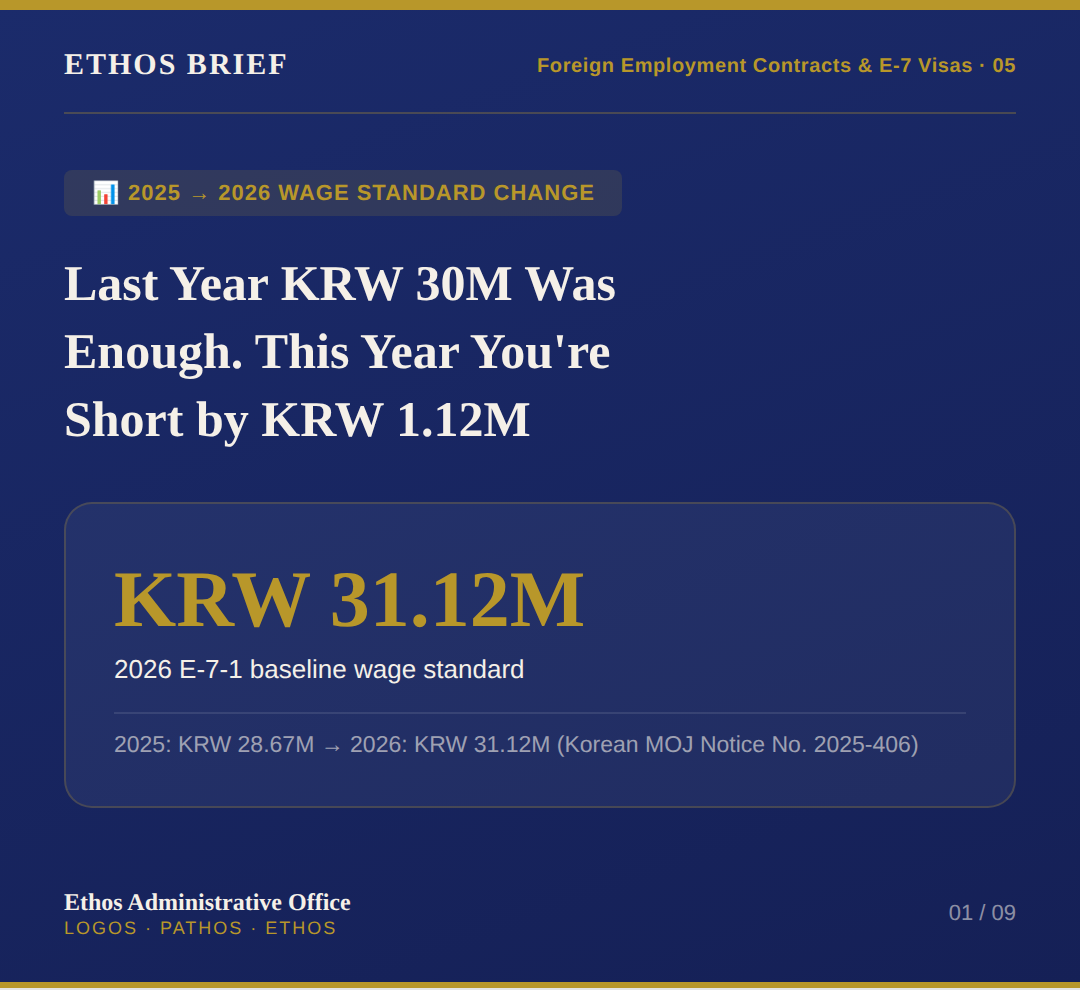
[Employment Contracts and the E-7 Visa in Korea ⑤] 2026 E-7 Visa Salary Requirements: How Much Should Employers Pay?
Korea’s 2026 E-7 visa salary requirements vary by visa category and occupation. Learn the basic annual thresholds, occupation-specific exceptions, and how bonuses and benefits affect salary assessments. This guide explains what employers should verify before finalizing an employment contract with a foreign worker.
#E-7 Visa#E-7 Salary Requirements#Korea E-7 Visa 2026
9/16/2026Sangjin Ji, Administrative Attorney
Licensing & Permits
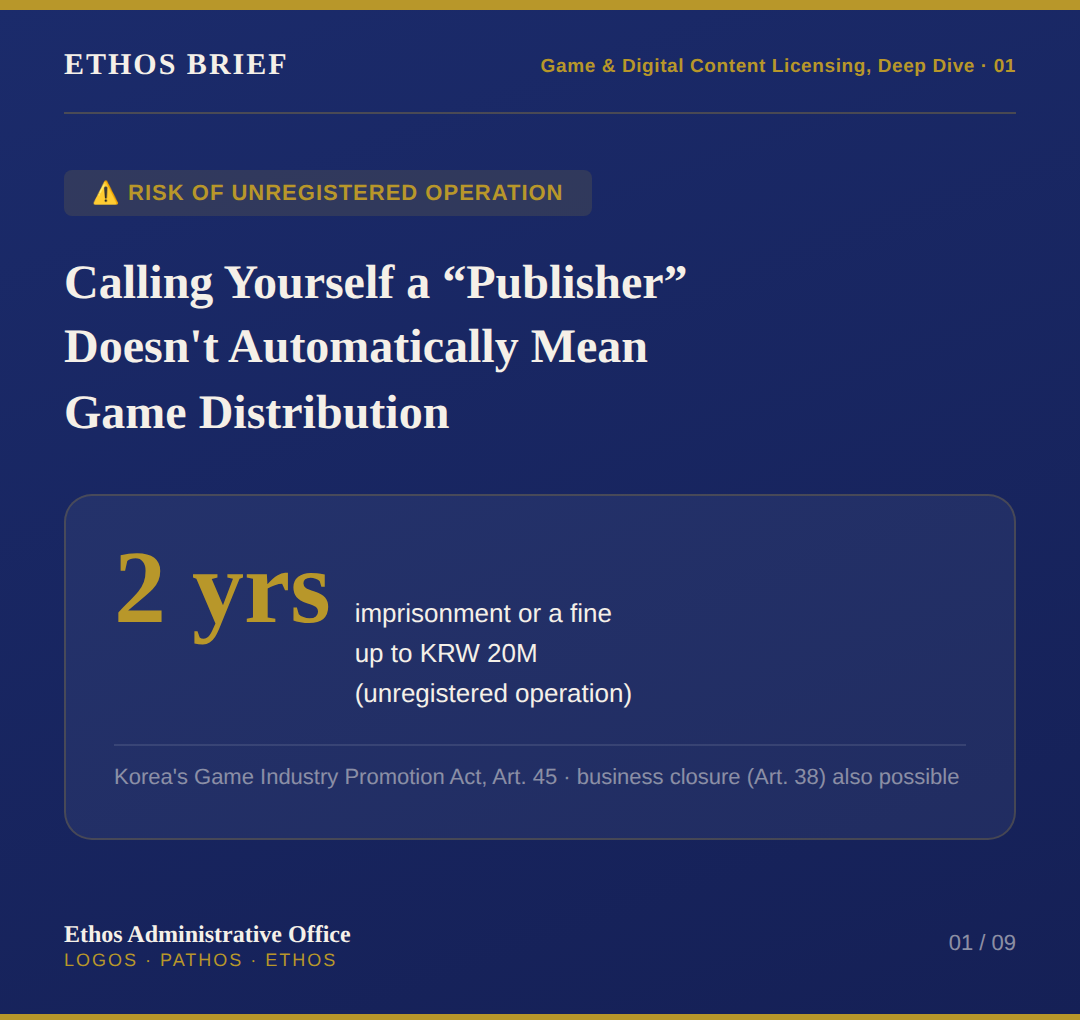
「Advanced Guide to Game & Digital Content Licensing」① Do You Need Both Game Production and Game Distribution Registration in Korea?
Developing a game in Korea does not necessarily mean that only game production business registration needs to be considered. Depending on the actual roles of the developer, publisher, IP holder, overseas game provider, and service operator, game production and game distribution registration may apply differently. This article explains six common business structures, including in-house development, outsourced development, overseas game imports, IP ownership, publishing arrangements, and direct app-market launches, and shows which registration should be reviewed first.
#game production business#game distribution business#game production registration Korea
9/15/2026Sangjin Ji, Administrative Attorney
Nonprofit & Company Formation
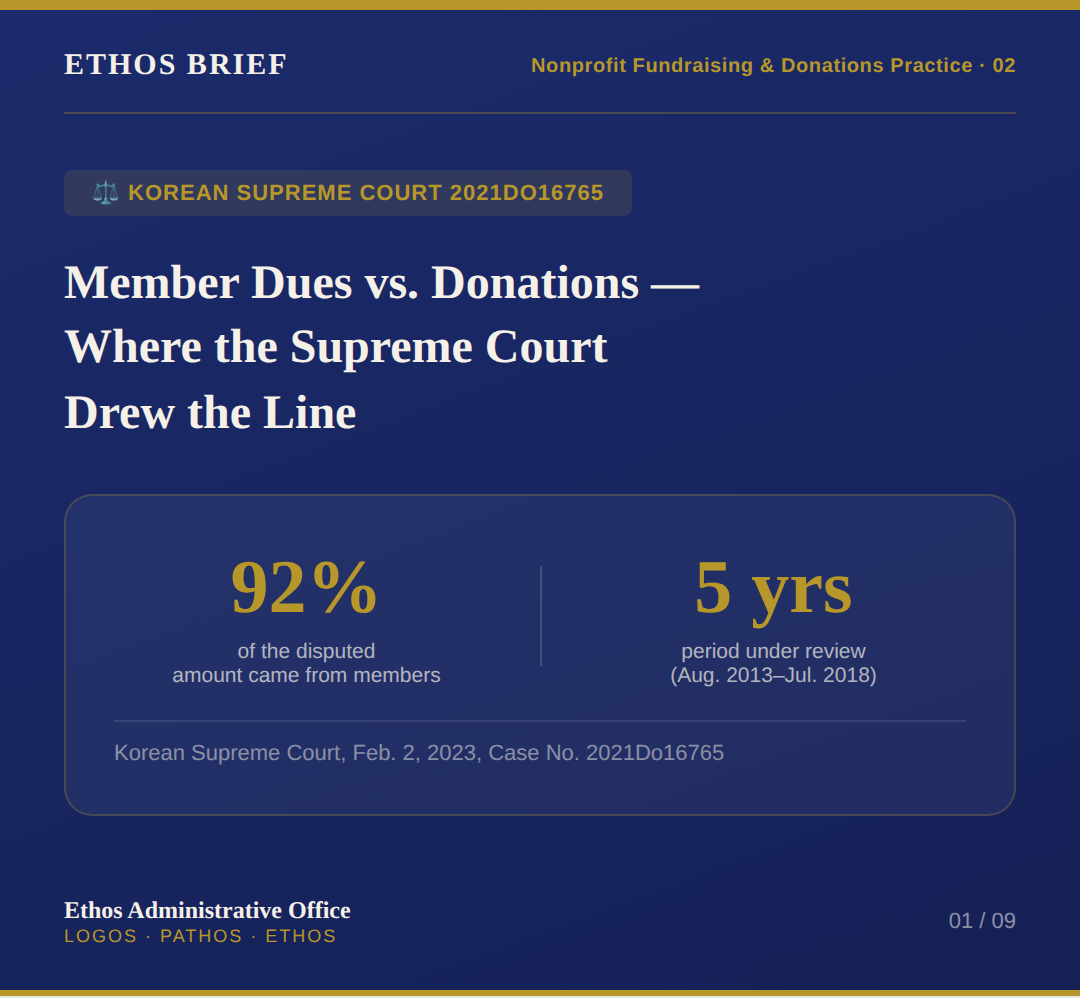
[Korean Nonprofit Fundraising & Donations ②] Are Supporting Member Fees Really Donations? — Five Factors Considered by the Korean Supreme Court in Decision 2021Do16765
Payments made by a “supporting member” of a Korean nonprofit are not automatically treated as membership fees. In Supreme Court Decision 2021Do16765, the Court examined the organization’s Articles of Incorporation, membership procedures, members’ rights and obligations, fee payments, and actual operations. This article explains how Korean nonprofits should distinguish membership fees from outside donations and why an incorrect classification may also affect donation collection registration requirements.
#Korea nonprofit#Korean nonprofit organization#nonprofit fundraising Korea
9/14/2026Sangjin Ji, Administrative Attorney
Administrative Appeal
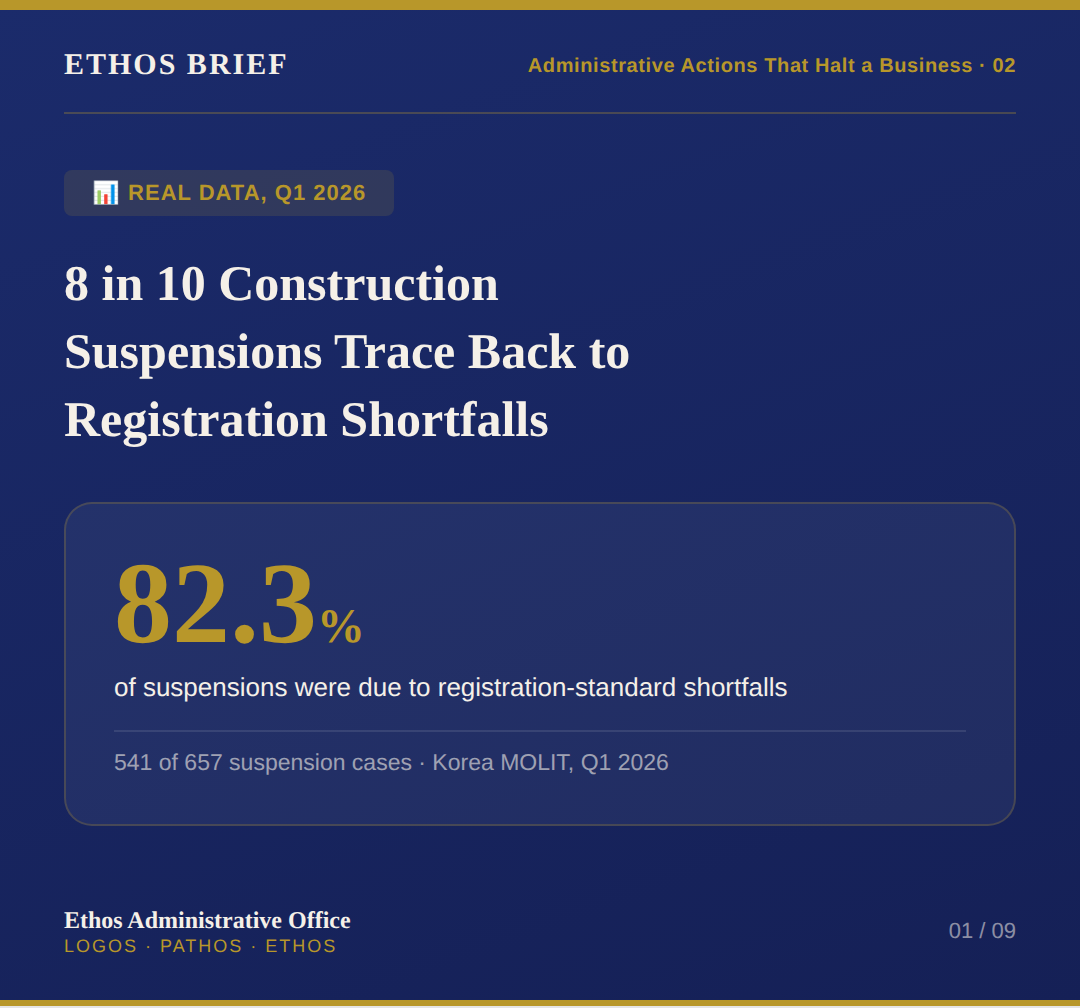
Construction Business Suspension in Korea for Registration Deficiencies — What to Check First When Technical Personnel or Capital Requirements Are Questioned
If a construction company in Korea receives a prior notice of business suspension for failing to meet registration requirements, it should first review technical personnel, capital requirements, the deficiency period, statutory exceptions, and prior sanctions. This article explains how to assess whether a registration deficiency actually exists and when the issue may escalate to cancellation of the construction business registration.
#construction business suspension Korea#construction registration requirements Korea#registration deficiency Korea
9/13/2026Sangjin Ji, Administrative Attorney
Licensing & Permits
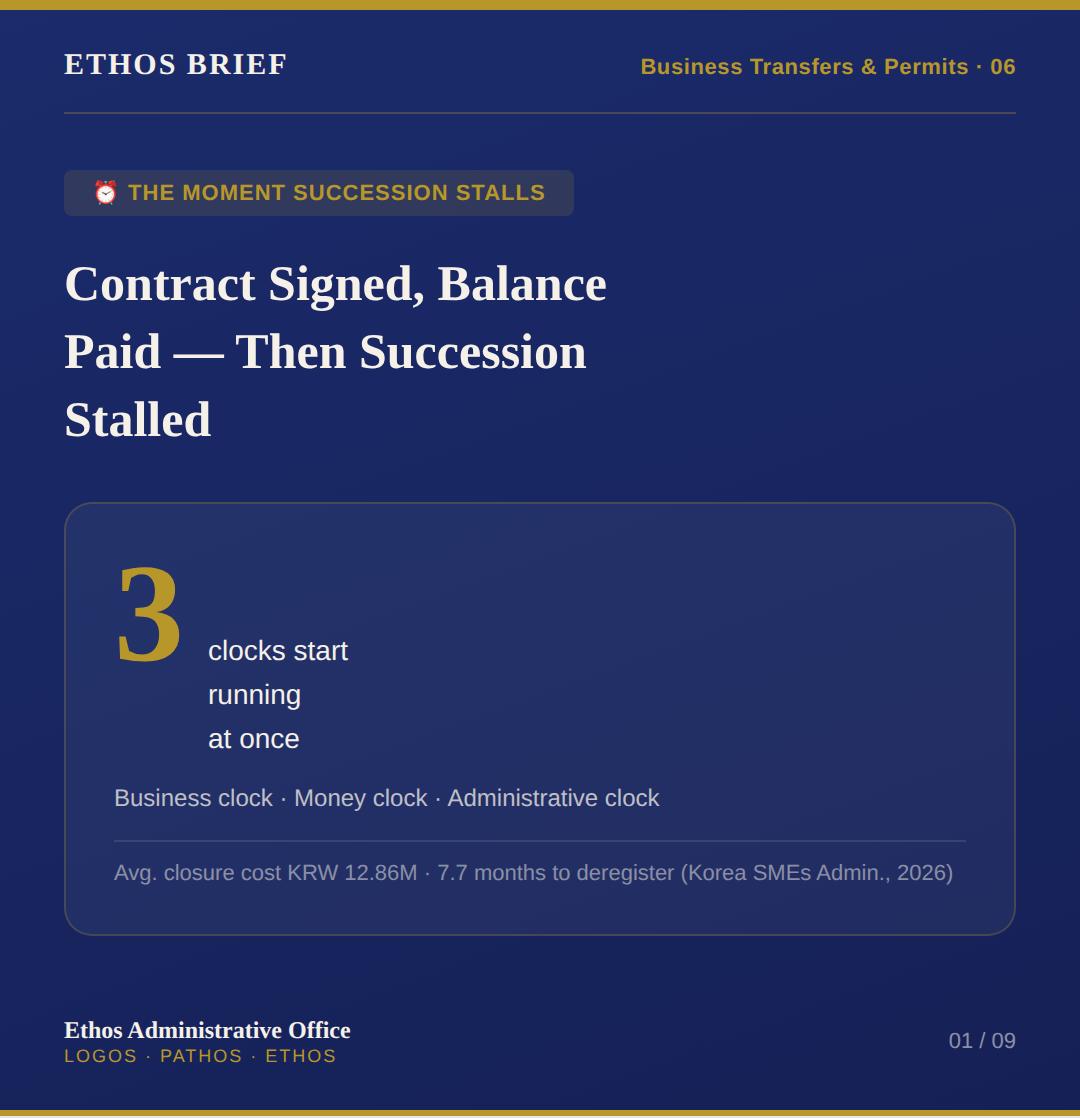
[Business Transfers and Regulatory Permits ⑥] The Contract Is Complete, but Succession to Operator Status Is Blocked — Where Did the Problem Occur?
If the business transfer agreement and final payment are already complete but succession to operator status is still blocked, repeatedly submitting the same filing is not the answer. Based on Korean Supreme Court decisions and administrative appeal cases, this article explains five common causes—missing documents, seller non-cooperation, an unclear underlying business transfer, non-compliant premises or facilities, and a final refusal by the administrative authority—and shows what should be addressed first in each situation.
#Operator Status Succession#Succession to Operator Status#Regulatory Succession
9/13/2026Sangjin Ji, Administrative Attorney
Visa & Residency
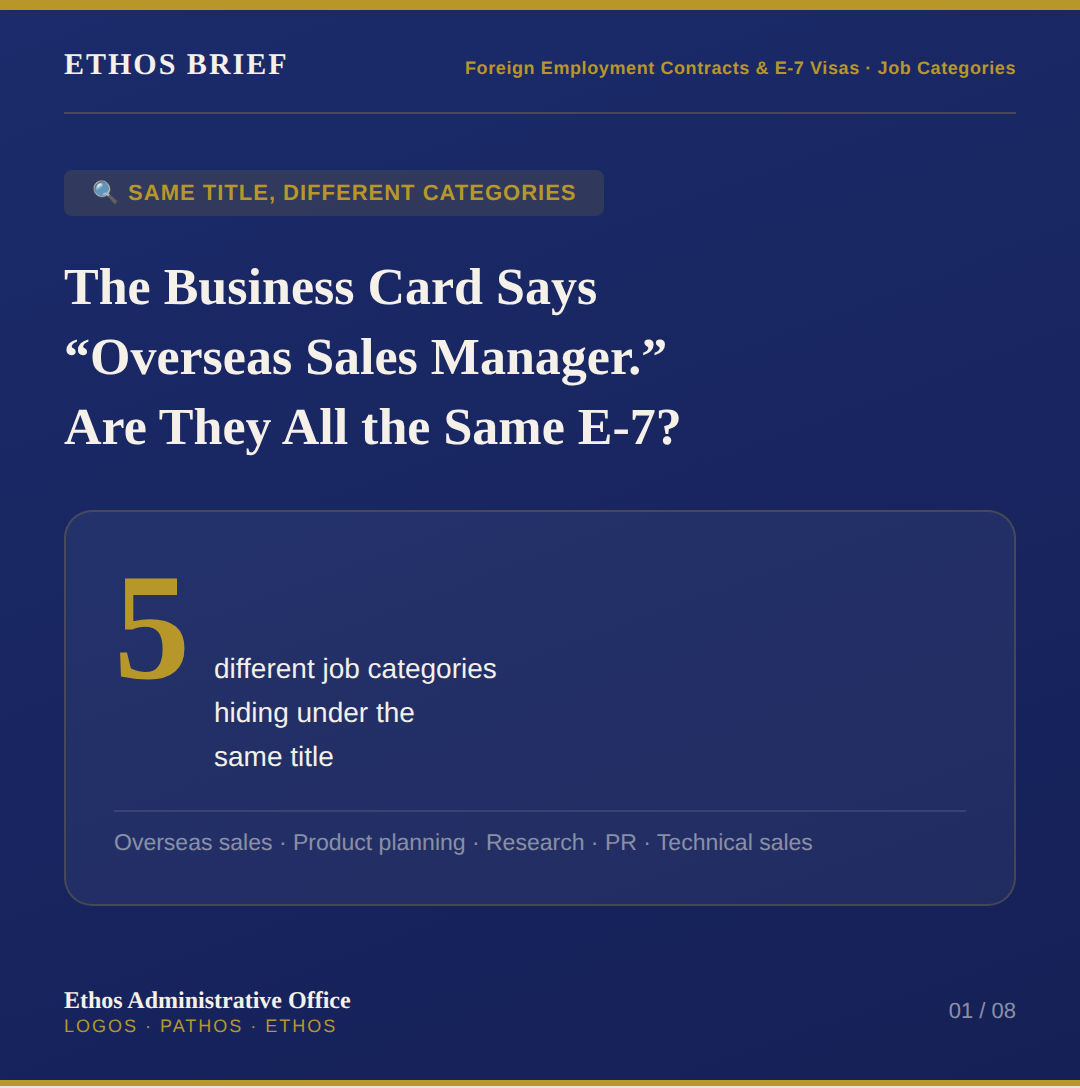
[Employment Contracts and E-7 Visas for Foreign Employees ④] We Hired for “Overseas Sales” — Which E-7 Occupation Should We Apply Under?
When hiring a foreign employee in Korea under an E-7 visa, a company job title such as “Overseas Sales” or “Global Sales Manager” does not automatically determine the appropriate E-7 occupation. The relevant occupation may differ depending on whether the employee’s actual duties primarily involve finding overseas buyers and negotiating export contracts, product planning, market research, advertising and public relations, or technical sales. This article explains how to identify the appropriate E-7 occupation based on actual job duties, with reference to updated occupation codes and an administrative appeal case.
#E-7 Visa#E-7 Occupation#E-7 Visa Occupation
9/13/2026Sangjin Ji, Administrative Attorney
Licensing & Permits
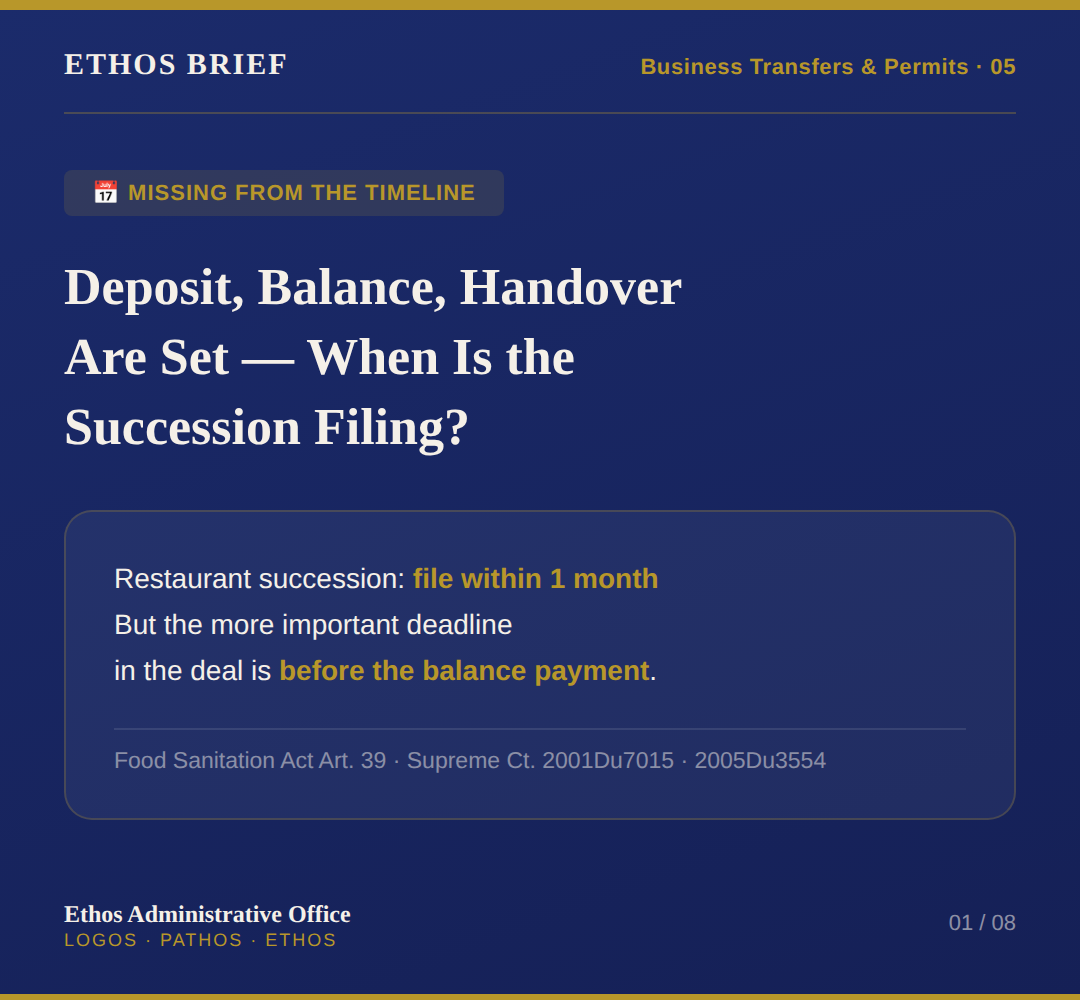
[Business Transfers and Regulatory Permits ⑤] When Should You File for Succession to Operator Status, and What Do You Need to Prepare?
When acquiring a business in Korea, when should the succession to operator status be filed? For food businesses, the successor generally must report the succession within one month, but the more important point in a transaction is what happens before final payment. Based on Korean administrative appeal decisions and Supreme Court cases, this article explains the filing requirements, required documents, seller cooperation, and the four key points—people, business, status, and timing—that should be aligned before closing.
#Business Transfer#Business Acquisition in Korea#Operator Status Succession
9/11/2026Sangjin Ji, Administrative Attorney
Visa & Residency
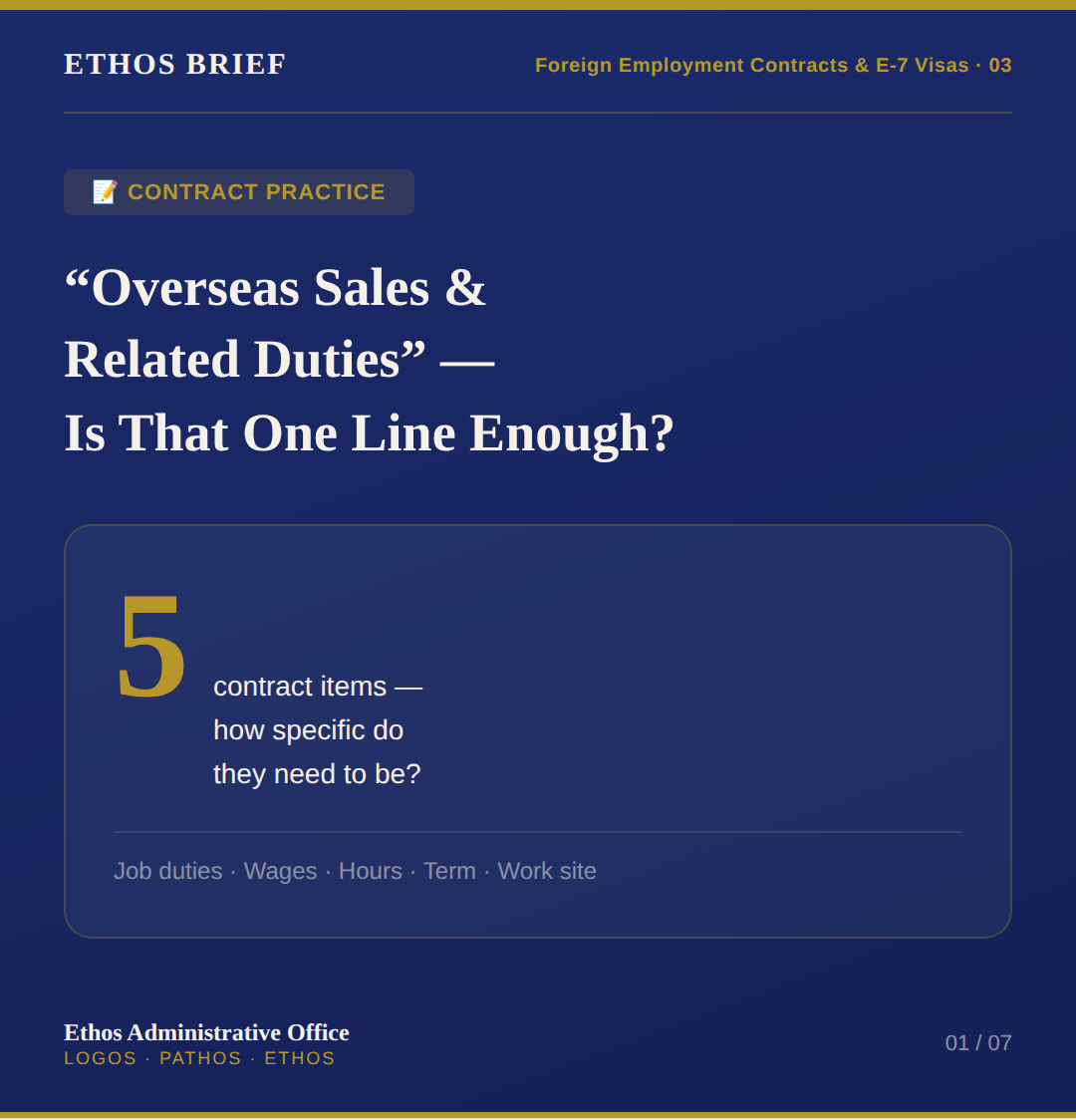
[Foreign Employment Contracts and E-7 Visas ③] What Should Be Included in a Foreign Employee’s Employment Contract? — Job Duties, Salary, Working Hours, Contract Period, and Workplace
When hiring a foreign employee in Korea under an E-7 visa, how specific should the employment contract be about job duties, salary, working hours, contract period, and workplace? The key is not using wording that merely appears favorable for the visa application, but ensuring that the contract clearly reflects the actual employment conditions. This article explains the main items employers should review before signing an E-7 employment contract and the practical issues that should be clarified in advance.
#E7 Visa#E7 Employment Contract#E7 Visa Employment Contract
9/10/2026Sangjin Ji, Administrative Attorney
Licensing & Permits
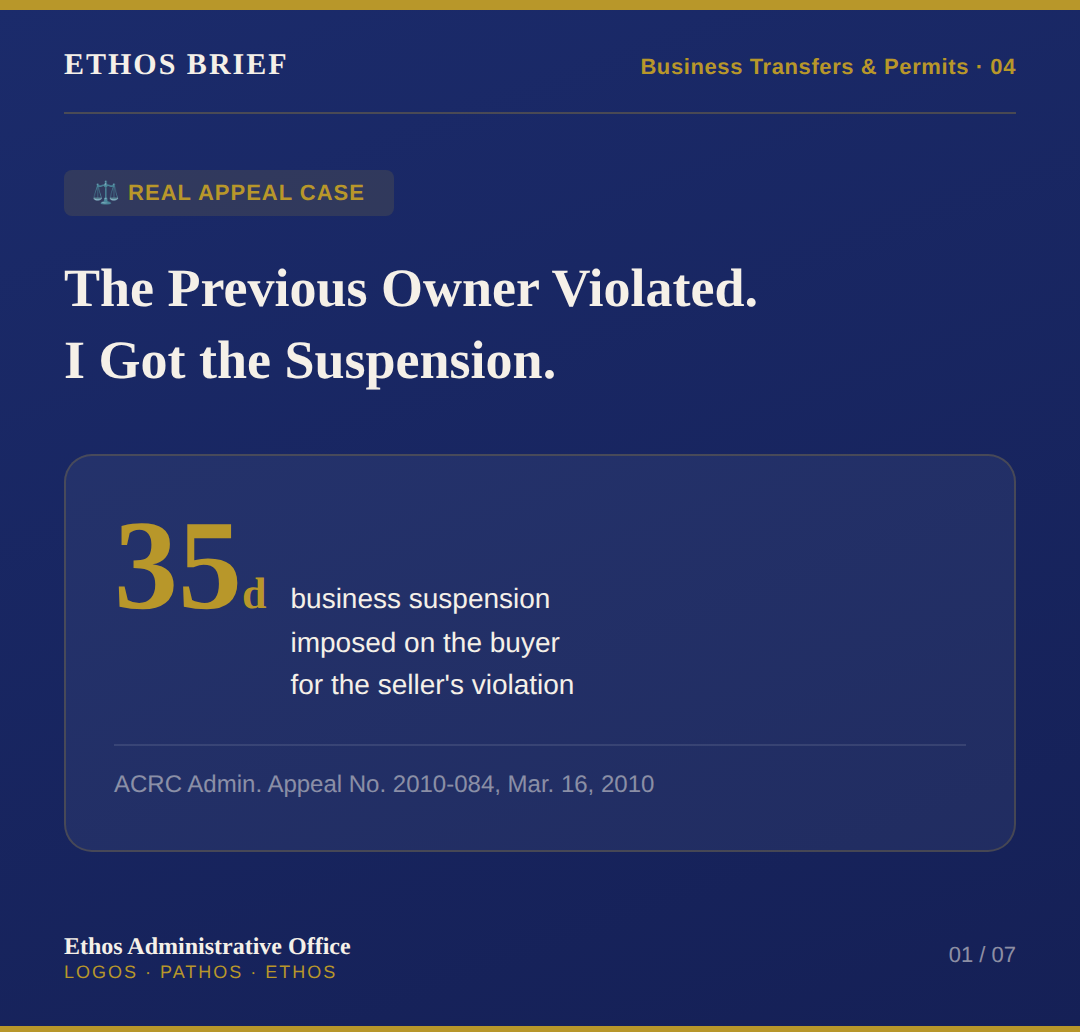
[Business Transfers and Regulatory Permits ④] Can the New Owner Be Suspended for the Previous Owner’s Violation? — Business Transfers and Succession of Administrative Sanctions
Can a new business owner in Korea face a suspension because of violations committed by the previous operator? Under certain Korean regulatory laws, the effects of administrative sanctions or pending enforcement procedures may follow the successor after a business transfer. This article explains three key situations—sanctions already imposed, pending enforcement proceedings, and past violations discovered after acquisition—and outlines what buyers should review before final payment.
#Business Transfer#Business Acquisition in Korea#Regulatory Succession
9/8/2026Sangjin Ji, Administrative Attorney
Most read
- 1What AI Startups Must Check Before Launching: Incorporation, Privacy, the AI Basic Act, and Government Support Programs640 views
- 2Game Development — Required Registration Before Uploading to App Stores570 views
- 3 [Employment Contracts and the E-7 Visa in Korea ⑤] 2026 E-7 Visa Salary Requirements: How Much Should Employers Pay?423 views
- 4 Regional Specialized Visa, Part 1 — F-2-R, E-7-4R, or F-4-R: Which Route Fits Your Situation?391 views
- 5Korea e-Arrival Card — There Is Only One Official Website383 views
Tags
Browse by specific topic
Korea immigration×8Regulatory Compliance Korea×8Korea Work Visa×8E-7 Visa×8Cosmetics OEM×7D-8×6Korean administrative law×6Business Transfer×6Business Acquisition in Korea×6Operator Status Succession×6Permit Succession×6Business License Transfer×6Business Transfer Agreement×6Regulatory Due Diligence×6Doing Business in Korea×6administrative appeal Korea×6OASIS×5Korean Administrative Attorney×5E7 Visa×5E7 Employment Contract×5Hiring Foreign Employees in Korea×5statement of opinion Korea×5Administrative Sanctions×5Game Rating and Administration Committee×5
Get new columns by email
Practical insights on visas, administrative appeals, and permits — delivered whenever a new post goes live.
You can unsubscribe anytime; your email is used only for the newsletter.
Have a question?
Have a specific case?
Columns are general guidance. Individual cases are reviewed after consultation.